Galva, Illinois
Empowering global communities via the advancement of music policy
1. Introduction
The Center for Music Ecosystems is privileged to lead The Music Policy Resilience Network into its third year, as the program continues to develop and demonstrate its relevance to participating towns, cities, and communities, as well as providing broader benefits to those able to gain from the findings and recommendations presented in this report and the accompanying reports for all participating cities.
The Music Policy Resilience Network emphasizes the role and impact of music ecosystem policy, focusing on how it can be effectively utilized in small, mid-sized, and geographically isolated communities, as well as among those who consider themselves geographical ‘outliers,’ increasing their resilience and resistance to internal and external shocks and disturbances, and enabling them to develop not just in the field of music policy, but across various related policy areas, as befitting need. The work examines how resilience is currently embedded in the music ecosystems of the participating towns and cities, identifies areas requiring further development, demonstrates international best practice case studies, and concludes with a series of actionable recommendations, tailored to each location.
The Music Policy Resilience Network merges both research and practice via the following activities:
Monthly 1.5 hour online masterclasses and workshops focussing on topics requested by members, including ‘Empowering the Artist in the Community’; ‘Music and Tourism’; ‘An Introduction to Music Policy’; ‘The Power of Networks’; and more
1:1 research with cities and stakeholders with an assigned expert consultant, achieved through a combination of literature review, data analysis, stakeholder analysis (interviews, focus groups, written exchanges, surveys, mapping exercises, and more) culminating in a written and freely available report with recommendations
Access to the Music Policy Resilience Network online platform, and direct links with all network members
Opportunities for peer review of ongoing music policy and related projects by other members of the network
Measuring research impact and prospective next steps in each of the communities
Lifetime membership of the network (including access to the online platform and monthly masterclasses).
Join the Network
The Music Policy Resilience Network has evolved into a rolling programme, with towns, cities and communities able to join at any point throughout the year. Contact us to express your interest: info@centerformusicecosystems.com
2. Context
Galva is a small rural town of approximately 2,500 residents, rooted in a predominantly agricultural landscape characterized by expansive corn and soybean fields in Northwest Illinois. Over the past three to four decades, Galva, like many comparable rural communities, has faced profound economic and social shifts. Originally buoyed by local manufacturing and commerce, the town has witnessed the erosion of vital social infrastructures that once enabled community cohesion and pride. These shifts have compounded the town’s challenges across multiple domains: social fabric, local businesses, education, healthcare, and transportation, necessitating thoughtful, sustained interventions to reweave the community’s social and cultural fabric. Located on the Timor Sea, it is also the largest city in the sparsely populated NT, and it is the smallest and most northerly Australian capital city with a population of approximately 139,902 (2021 census).
Historically, Galva thrived as a hub for employment and social interaction, where residents mingled and participated in shared activities that knitted a tightly woven communal identity. The gradual loss of manufacturing jobs and the attendant decline of commerce have fractured these social networks, with many residents commuting to distant workplaces or shifting to remote online roles—a trend accelerated post-pandemic. The diminishing presence of essential local services, such as grocery and hardware stores, further compounds the loss of casual social engagement opportunities, thereby weakening communal bonds. These socio-economic realities, set against a rural backdrop punctuated by modern wind turbines signaling economic transition, underscore the urgent need for community revitalization strategies that are culturally rich, socially inclusive, and economically viable.
Within this context of social transformation and infrastructural scarcity, the Levitt Foundation’s intervention since 2018 has been a pillar of cultural and civic renewal. The genesis of this sustained effort began independently in 2014 when John Taylor (Iraq war veteran and computer programmer turned volunteer and booking lead for Levitt AMP Galva) initiated local concerts, but it was in 2018 that the Levitt AMP grant—a $25,000 matching grant enabling ten free, public concerts annually—provided the necessary leverage to expand these efforts beyond his personal capacity. Since then, Galva has benefited from continuous Levitt Foundation funding each year, including a pivotal three-year matching grant spanning 2021-2023 and a subsequent grant extending through 2025. Most recently, a fresh three-year commitment commencing in 2026 ensures the continuation of this vital work. Notably, each Levitt-funded cycle focuses exclusively on free concerts in public spaces, reinforcing accessibility and maximizing community reach.
The impact of Levitt’s funding on Galva's social landscape is multifaceted and profound. The requirement for public voting during the initial two years of funding galvanized community engagement, transitioning passive residents into active participants and advocates. This democratic involvement fostered a palpable momentum that catalyzed volunteerism, local business openings, and citizen-led projects, effecting tangible revitalization across the town and the region. These concerts, visible and accessible in shared public spaces, serve not only as entertainment but as catalysts for inspiration and community agency—the phenomenon where witnessing vibrant communal events motivates others to initiate their own creative and social endeavors.
The resultant communal experience physically gathers residents for shared creative engagement, strengthening social bonds that economic adversity had eroded. The Levitt concerts have become transformative events—social glue that paves the way for greater inclusivity, interconnection, and shared identity. John has extended these cultural interventions into educational contexts by bringing artists into local schools, thereby embedding immersive cultural experiences into young people’s formative years. With these youth viewing such cultural vibrancy as normative, it is John’s intention that this intervention seeds long-term cultural continuity and community resilience, with individuals who will champion artistic participation and community cohesion in adulthood.
The Levitt Foundation’s cumulative investment represents a substantive commitment to cultural infrastructure in Galva. These concerts constitute about 10% of Galva’s total cultural offerings; in 2025, John and his team of volunteers produced 95 concerts alongside 22 school programs, the latter emerging only recently, illustrating an organic expansion of cultural activity inspired by foundational Levitt support.
The broader socio-economic backdrop amplifies the foundation’s importance. Galva’s dwindling local commerce and limited educational facilities pose challenges to everyday community life and cultural engagement. Local healthcare has contracted, with key services now requiring travel to more distant cities, and public transportation is virtually non-existent, increasing residents’ isolation. Amid these constraints, the concerts inject vital public life and a sense of hope, counteracting tendencies toward social fragmentation and economic inertia.
Galva’s cultural identity, linked to its Swedish-American heritage, persists even as traditional folk practices wane. The concert series, by embedding inclusive, contemporary cultural expressions into public life, complement this heritage with new, dynamic narratives that engage diverse residents, bridging history with present social and creative aspirations.
By centering accessible, free public concerts within a broader ecosystem of community engagement and youth education, the work being undertaken supports the regeneration of social cohesion, economic vitality, and cultural identity. This ongoing work not only represents responsive adaptation to local needs but also models how arts-based interventions can foster sustainable rural revitalization, creating optimism for Galva’s present and future.
3. Deliverables
PHASE 1
Stakeholder engagement
• Interview with Carlin Follis, member of the local historical society, board member of the local Levitt AMP Series, volunteer with Levitt AMP Galva Concert Series, Crossroads Cultural Connections founding member
• Interview with Jerry Kolb, independent promoter and collaborator with Levitt AMP Galva Concert Series
• 2 x interviews with John Taylor, Levitt AMP Galva Concert Series founder and director, Crossroads Cultural Connections founding member
• Additional ecosystem perspectives including David Dyer, City Administrator, and Michael Martin, photographer.
PHASE 2
Three best practice international case studies
Three best practice international case studies in several interlinked areas of focus for Galva’s music ecosystem, namely, demonstrating cultural, social and artistic value via programming of live music, as well as achieving financial sustainability.
4. Methodology
This work has been carried out through a combination of desk research and qualitative interviews, focusing on an active involvement of the city contact in the whole process, to maximize the impact and value of the work while it was being produced. The result aims to be a synthesis of this process of work, containing key findings and suggested directions for action.
PHASE 1
Stakeholder Engagement
Context and Introduction
The first phase of MPRN research in Galva was a preliminary listening exercise consisting of four in-depth interviews to determine shared challenges, gaps and desired futures between different actors in Galva’s music ecosystem. The interviewees are all drivers of community change and action, fulfilling multifaceted roles within the ecosystem, with a strong not-for-profit bias. These interviews resulted in the identification and further definition of the following key challenges and possible futures.
Key Challenges
1. Economic Decline and Commuter Culture
Galva has faced significant economic decline as many traditional local businesses and manufacturing jobs have disappeared or moved out of town, or overseas, leaving mainly service and agriculture businesses. As a result, residents often commute to larger towns for work and shopping, which weakens local economic engagement and diminishes community connections, reflected in the fact that schools have also been consolidated geographically, as well as hospital provisions now also being further away, and of course the resulting impact on arts and cultural provision and availability. People now inevitably seek this out of town, also. This dynamic has led Galva to be described as more of a "bedroom community," where people live in the town but have limited social and economic interaction within the local area as compared to years prior.
KEY QUOTES
John Taylor, Founder, Levitt AMP Galva Concert Series: “All of the small towns in this area have gone through significant changes in recent decades. A lot of this is economic – or at least, it started economically, but the impact has been vast. For example, all of these small towns had businesses where local people worked, shopped, and had frequent interactions with others in the community. These seemingly trivial day-to-day interactions went a long way towards making these communities strong. Now, most jobs have left these towns and they have become bedroom communities.”
Carlin Follis, Volunteer, Levitt AMP Galva Concert Series: “Something we talk about all the time is not only how do we get people from other towns to come to our concerts but how do we get more people from Galva to come. There are 2,500 people in town, and 500 people might have attended the concert last week. People go even if they don’t care for the genre. The Levitt mission is to use underused public spaces – we have a great big park in the middle of town and this is the centrepiece of the town. But we want more people to come out to the concerts. We are getting people to come from 1-2 hours away for certain artists but we want double that from Galva.”
David Dyer, City Administrator: “Since 2012, funding cuts totaled over $2 million for Galva,” noting the reduction in state aid and its impact on the city’s budget.”
2. Limited Community Infrastructure and Social Cohesion
Galva is experiencing a decline in community infrastructure, with many public gathering spaces and local social hubs disappearing, including grocery stores, hardware stores, and bars that once featured live music. The limited transportation options—such as the absence of public transit and the scarcity of taxi services—further restrict residents' access to healthcare and cultural events. This combination of factors inhibits the regular social interactions essential for developing a strong sense of community identity and cohesion. All of this is further exacerbated by a huge rise in online working, particularly since the pandemic. There is simply a huge reduction in opportunities to cross paths and connect with fellow residents, and redressing the balance, in the wake of seismic cultural shifts such as depopulation and huge technological advancement enabling homeworking, will not be straightforward.
KEY QUOTE
Carlin Follis, Volunteer, Levitt AMP Galva Concert Series: “The local music scene is alive and well in Galva. John (Taylor) has people approaching him nearly every day asking to come and play. Before the Levitt concerts we didn’t have much of anything going on. It is a small town that has gotten smaller over the years. Most people leave the town for their jobs and travel an hour to work. So not a lot has been going on in terms of entertainment. A local bar might have a garage or cover band from the next town over but not original, live music.”
Jerry Kolb, independent promoter and music supporter: “Music being used to address community isolation is happening at a small scale currently – there is a local population of people who are coming together on a pretty regular basis to attend these concerts, In addition to that there is a growing number of people coming from other places to attend these concerts. My hope is that this can continue to grow over time – both local and people coming in from other areas. That this can be a source not only of entertainment but also economic impact, social impact and cultural impact – all of these aspects. I’m hoping that this will grow and will get to a place where this can continue beyond John's lifetime. He doesn’t take any pay for doing this but wants to set things up in a way that it will continue. He wants to work to establish things in a way that it can be somebody's livelihood and ensure it continues indefinitely. Part of it is getting people in this area to believe it is possible to have access to these types of performances, and then from there… getting them to be interested in being active within the community – either with music or in other ways.”
Michael Martin, Photographer: “One of the major challenges for most rural areas is communication. Many have lost their local newspapers inhibiting civic participation and volunteerism. Local events, businesses, and governmental activities all struggle for a way to spread the word. It's not uncommon to hear people say “I wish I knew about that before”, which further emphasizes the need and serves as a source of frustration to stakeholders. Finding a solution to this problem will provide increased access to local information and ensure residents of all ages have reliable, timely access to local news, events, and emergency information. Also, strengthen community engagement and civic participation and encourage greater involvement in local decision-making, volunteer activities, and cultural events.”
3. Sustainability and Funding of Cultural Initiatives
The sustainability and funding of Galva’s cultural initiatives, especially the music concert series, face significant challenges that threaten their long-term viability. The concert series relies heavily on grants like those from the Levitt Foundation: a spend-down foundation sunsetting in 2041. Additionally, securing ongoing financial backing and policy support from local government and corporate sponsors is a persistent challenge, and one which is necessary to sustain and expand the music programs. Current efforts focus on sustainability planning aimed at making the concert series a lasting community asset that could even provide livelihoods and contribute to the town’s cultural vitality over the long term, but support is needed to better identify how this can be achieved, especially in such a complex and challenging external climate, both locally, nationally and further afield.
KEY QUOTE
Carlin Follis, Volunteer, Levitt AMP Galva Concert Series: “Fostering the growth of a sustainable concert community means that the goal is that the work is long term rather than short-term or immediate, and, transforming the initiative into an inspiring community engagement in music. The work will cultivate a belief in the community's right to access to live music, and encourage active participation in the events. John (Taylor) managed to raise over $100,000 for a permanent stage – he keeps pushing water uphill. The largest donation came from somebody 1-12 miles away but the money was essentially all community-based, all individual giving.”
Jerry Kolb, independent promoter and music supporter: “The fact the concert series is free is probably not a weak point but a strength. But without the Levitt funds – close to half the budget – it would be much more difficult to have free tickets or the quality of what is presented would be drastically less. You would not be able to get these national type touring acts, it would be regional or local. It is normally done year by year and without this the series is not sustainable. The heavy reliance on the Levitt funding means that if this was to disappear they would struggle to maintain it in its current form.”
4. Community Engagement and Audience Development
Although the concert series attracts a strong attendance from visitors outside the town, participation and attendance from Galva residents themselves could be significantly improved and this has been highlighted as a key objective for the team, which speaks directly to the desire for creating better community cohesion and addressing social isolation. To create greater community ownership and involvement in live music events, there is a clear need for enhanced marketing, outreach, and local engagement strategies, including, ideally, an experimental approach whereby success can be measured and strategies adapted incrementally. Several barriers hinder this goal, including limited local interest or awareness, shifts in entertainment habits following the pandemic, and economic constraints faced by community members.
KEY QUOTE
Carlin Follis, Volunteer, Levitt AMP Galva Concert Series: “Something we talk about all the time is not only how we get people from other towns to come to our concerts but how do we get more people from Galva to come? There are 2,500 people in town, and we had 500 attend the concert last week. We are getting people to come from 1-2 hours away for certain artists but we want double that from Galva. We look at who is watching our streams as they are filmed by the local cable company and try to target our advertising in this area, and the local radio station will do things for us too. They have done a survey to ask how people are hearing about it. We need to get more people out the door and into the park. We also need to ensure we continue to build the momentum we have already achieved. Once we drew 1600 people and we want to sustain this, we think our artists deserve it.”
5. Accessibility and Availability of Music Resources
The area faces significant challenges related to the availability of music resources and opportunities. It lacks essential infrastructure such as music shops and qualified instrument teachers, which limits residents' ability to easily access musical instruments and professional guidance. Performance spaces tend to be bars or restaurants. Consequently, most original musicians in the community are compelled to travel to other cities to find suitable venues for performances and opportunities for further learning and development. Although local schools do offer some music lessons and programs, the overall access to comprehensive music education and cultural exchange remains limited. This gap restricts the growth of local talent and reduces the community’s exposure to diverse musical experiences, making it harder to cultivate a vibrant and sustainable music scene within the area. Galva must invest in all elements of its music ecosystem in order to create a positive feedback loop, leading to growth.
KEY QUOTES
John Taylor, Founder, Levitt AMP Galva Concert Series: “Since the pandemic, being in the bar business has become much more difficult and many have closed – a lot of bars have some music here and there – typically cover bands – but many have stopped having music or have closed altogether. People' s behaviour has changed and with the current economic situation, people don’t spend as much time or money in bars as they did in the past. No bars in our immediate area regularly have live music.”
Carlin Follis, Volunteer, Levitt AMP Galva Concert Series: “John’s concert series and organisation is a real achievement. Within the last six to eight years there has been a noticeable shift in the involvement of people in this area, whereas previously there was a decline, where businesses were going away – people were very noticeably working and shopping in other areas–I think there has been a slight shift back to people making an effort to be involved in the community – and we have to think a lot of it is due to the music program – it has brought a lot of people together.”

Possible futures and strategies
1. A Sustainable, Community-Rooted Music Ecosystem With Educational and Developmental Support
The Levitt AMP Galva Concert Series is laudable and deserves to be celebrated, but to enhance its growth, alongside the growth of what can be considered a music ecosystem in Galva, it would be wise to think about expansions of current provision to deepen the music for Galva, including music education offers for children, young people and adults, which can also create further demand for, for example, live music provision and a music shop, as well as further down the line, recording facilities. A focus on participatory music making activities may be a way of engaging residents as well as out of town visitors, and fills an existing gap in music provision and education. This could be at least partially filled by visiting musicians – also achieving extra income for them during their engagement in Galva.
2. A Robust, Resilient Cultural Program Supported by Diverse Funding Models and Community Ownership
Galva has achieved a great deal and its work via the concert series is outstanding. There may be learnings to take away in terms of incentivising ecosystem actors i.e. bar owners to diversity their provision of live music and to gradually build audiences. Galva has experienced impressive success with fundraising via individual giving and corporate sponsorship for a concert stage, and it may be possible to build on this by bringing the community closer in to future developments, for example: encouraging the community to vote for what their preferred initiatives as part of a future fundraising mission, and to enhance a sense of community ownership around the arts and culture offer.
3. Greater cross-sectoral development at policy level: for example with tourism and healthcare
Henry County has an active tourism department. Developing a closer working relationship beyond the music sector with what are often considered discrete policy areas such as tourism and/or healthcare could be of potential great benefit for Galva. It would be strategic to demonstrate how greater investment, or focus, on Galva’s music ecosystem can directly impact several policy areas including healthcare (i.e. wellbeing, community cohesion, physical movement classes with music provided by local musicians); and tourism, with greater signposting for visitors and the provision of tourism packages including both the concert series and small businesses in the town.
PHASE 2
Three best practice international case studies
Context and Introduction
The second part of this work comprises three reference case-studies in three areas of focus for Galva’s music ecosystem, namely: demonstrating the economic, social and cultural value of the work, and becoming financially sustainable.
CASE STUDY 1
Financial sustainability and community engagement
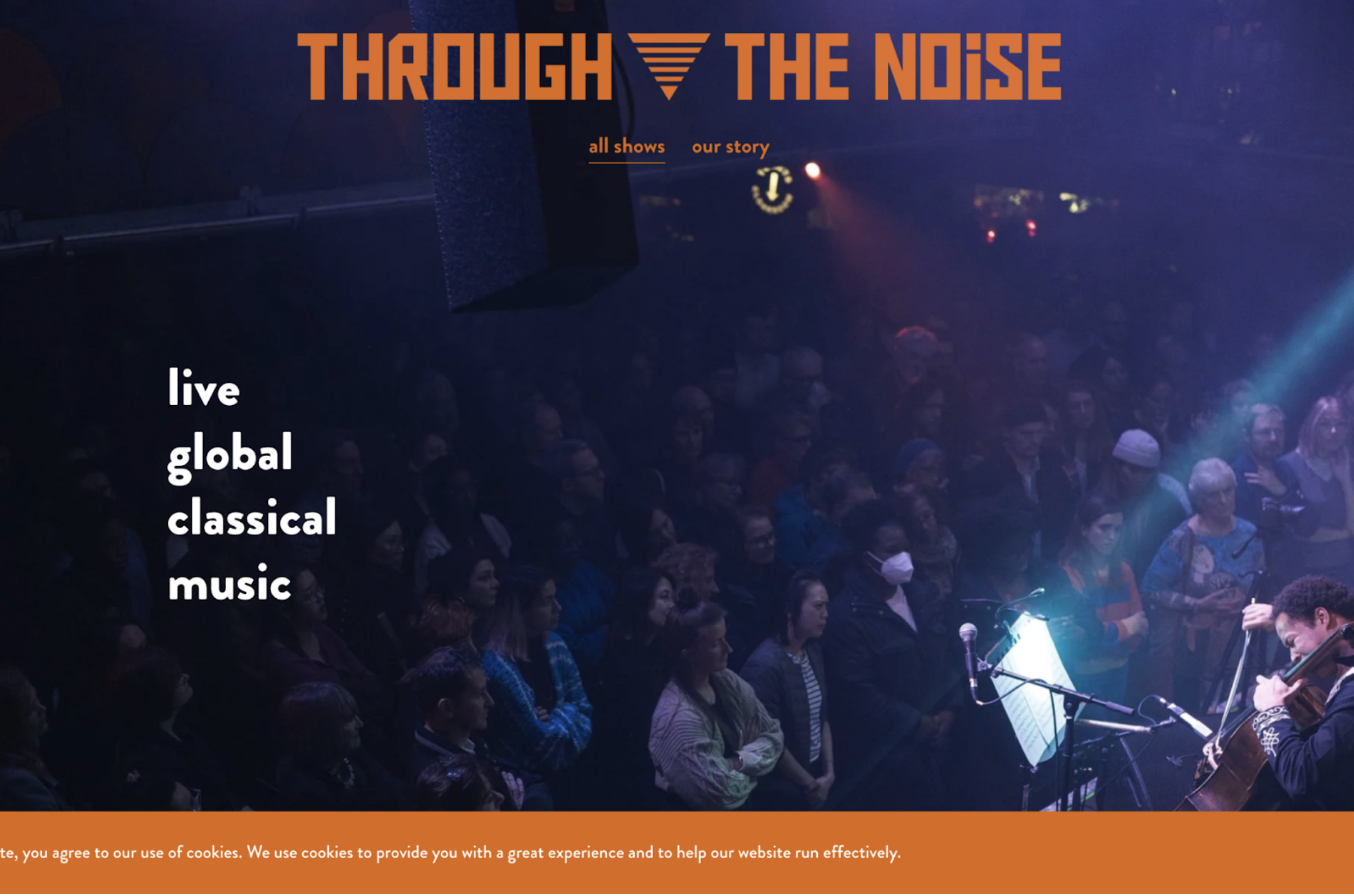
Through The Noise: Live Global Classical Music website homepage including photo of live performance (November 2025).
Lessons in programming, crowdfunding and marketing from Through The Noise live global classical music concert series (UK and worldwide)
Context and Motivation
Through the Noise (TTN) launched in 2021 as a grassroots classical music organisation inspired by strange period of time just in the wake of the COVID-19 pandemic, whereby for a brief period in London there was a genuine “grassroots classical music scene”, because none of the major institutions were able to respond quickly enough to the external environment, and in the gap a lot of smaller organisations popped up hosting classical music in whatever spaces they could find. Jack Bazalgette, founder, reports that this scene was mostly short-lived and exceptional due to the unprecedented circumstances related to the pandemic, but out of this, TTN realised there was an audience for classical music which was both willing to pay a decent fee for tickets, and who were also a much more diverse audience than for your average concert or chamber recital. With this realisation, they started putting on concerts within that scene as a not for profit classical promoter.
Fast forward to 2025, and TTN is now an international promoter and tour organiser of classical music concerts. Its unique selling point is that these events take place in clubs and standing music venues. Concerts are always amplified and are big productions with lighting design, with programmes consisting of either classical or closely related to classical music. They have concerts in c.24 cities at the moment, and produce around 280 concerts a year. They manage everything in-house, with a small team of two people, from booking and working on shows to working with venues and having sponsors. They have a specialism in marketing: Jack’s fellow co-founder had invaluable previous experience as the marketing director of a major international immersive theatre company. They started from the belief that classical music is a great thing that not a lot of people access, nor even understand why they might want to go and experience it live. Marketing-wise, their aim has been to “hone the art and science of marketing to persuade people to try it”. Jack reports that marketing is at the core of everything they do - the audiences for their concerts are very different; they change the concert atmosphere, and also it is directly reflected in the financial model.
Key challenges… and achieving financial sustainability
What differentiates TTN from other arts organisations is that they take an “all or nothing” approach to promotion – if they are going to do something, they really have to go for it. Uniquely, all concerts are crowdfunded: people are presented with a choice and are essentially voting for what they want to have programmed. They have an extensive mailing list of core supporters, numbering 25-30,000 people. Both fans and artists likewise effectively fill TTN’s inbox with ideas and suggestions of what they want to see. Initially they would take one or two forward and try to make them happen. But the principal is that too much classical programming had forgotten to be answerable to audiences. TTN believes that the whole organisation should be geared towards being totally connected to and at one with their audience – and to take ego out of the equation, with programmer and booker roles often seen as lofty or detached VIP roles. Instead, they pitch a concert, put it up online, if it reaches “X pledges in X amount of time”, the concert is announced, everybody is emailed, and it is confirmed, and additional tickets are released if necessary.
They have always taken some financial risk – they guarantee to always pay the artists – even if the concert falls through, and commit to underwriting this themselves. However, to date, there has only one where they had to do this out of 230, although sometimes, as for many promoters, it has been a fine line and net zero. But Jack reports that this process is “really exciting and means the audience is a part of the journey of making it happen. It affects the vibe in the room”. In some ways it is similar to normal ticketing procedures including advances and guarantees – but the difference is that it is about how people feel. These dates just need enough people to come in order to function – “it’s up to you to buy your ticket”. TTN has not historically received grants other than two very small grants of around £2000 to focus on artist development. The financial model remains intentionally simple.
Social impact
At its core, TTN is not running a purely commercial business: they report that they would make different decisions both artistically and in terms of managed if they were driven by commercial success, but on the flip side, they do worry about whether it will be a successful concert artistically. Much effort is orientated towards this – balancing art for arts sake and running a small company is the mainstay of their daily work. Most of the work happens in mainstream music venues – Koko, or the Roundhouse. It is justifiable to say that TTN’s work fills a gap in the cultural landscape – no other classical music happens in these venues. Jack adds: “People like the sheer weirdness of it – a good example would be Messiaen's Quartet for the End of Time (an eight movement chamber music piece composed by Messiaen while prisoner of war in Germany in 1941 and first performed by fellow prisoners) at Fabric (London’s iconic 1,600 capacity nightclub), which has one of the biggest speakers in the world…” Jack continues, “so you will feel the bass of the piano and it will be a real immersive thing without being gimmicky.”
Audience development and diversity
Social media is a central part of TTN’s operations. They understand that adverts have to be in front of as many people as possible, but equally have to be of an excellent standard and engaging for different audience groups. The programming itself is equally important here. TTN has found that simply programming folk and classical music from different parts of the world in a city with different diasporas has been hugely eye opening. They now have a significant, loyal Turkish and Egyptian following who trust them to provide a welcoming atmosphere and “safer space” – even if the next artist programmed is not their favourite local artist that originally brought them into contact with the work of TTN. Jack adds a note of caution however that this should not be over simplified – there is also an element of randomness and complexity around audience development.
ADVICE FOR A SUSTAINABLE AND IMPACTFUL CONCERT SERIES
Jack Bazalgette, co-founder, Through the Noise: “You could start with principle that you have to really believe in what you are doing – you have to be convinced before convincing others – but the truth is that sustainability is the sum of a lot of different parts – it is slightly reductive to say that heart and soul can achieve this – but probably truer to say that venues that people feel comfortable in, artists that connect with audiences, having a keen eye for balancing budgets, making artists and musicians feel welcome and able to do their best work, while also not totally giving up all control – there is probably a very delicate balance of all of these factors that needs to be achieved, as well as the additional, external factors. If you don't have one of many things, i.e. poor marketing or an uncomfortable venue, it becomes unsustainable, I think.”
CASE STUDY 2
Financial sustainability and social value
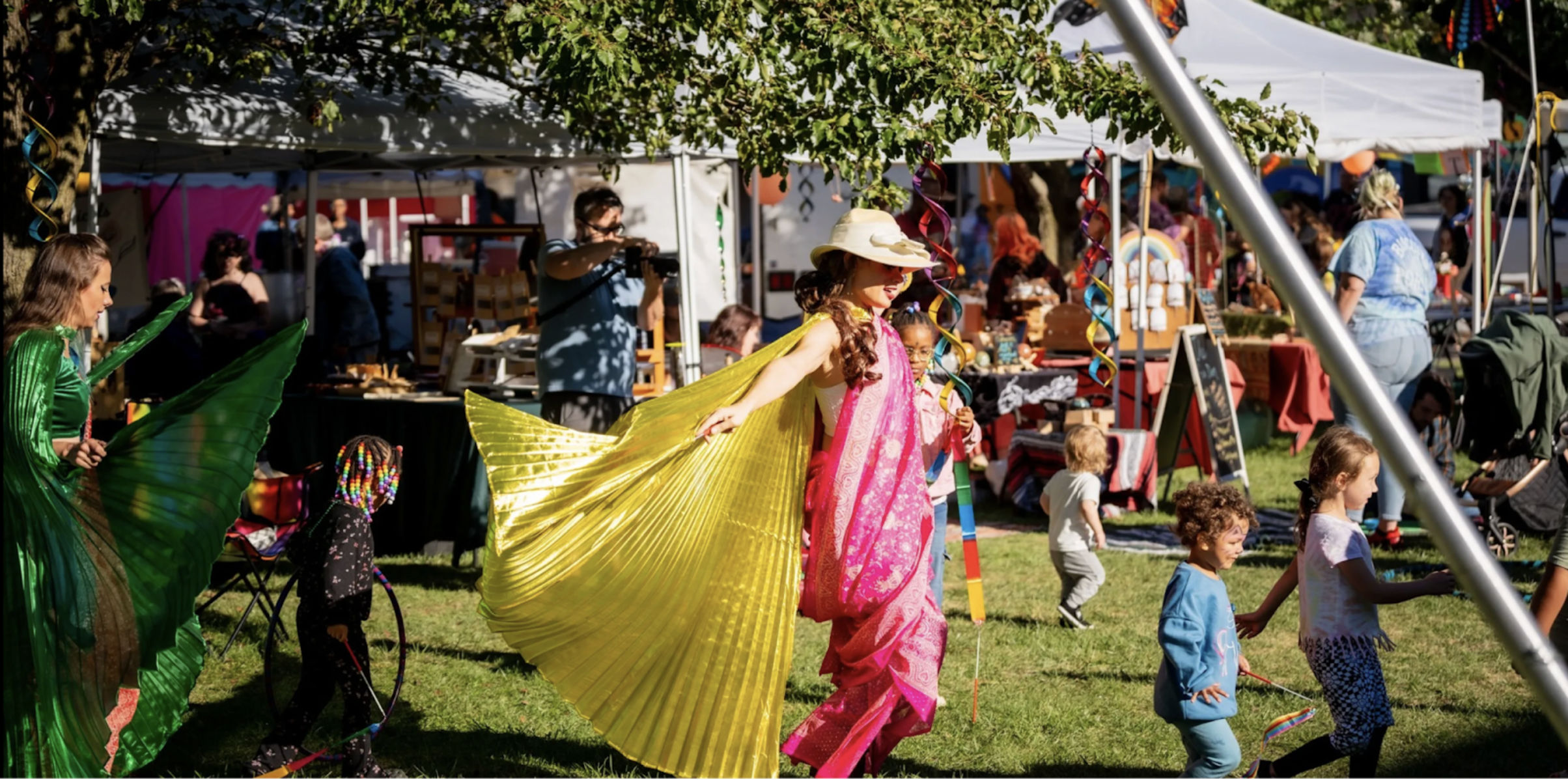
Culturefest World Music and Arts Festival (Princeton, West Virginia, US)
Culturefest is a four-day event held in downtown Princeton, organized by the nonprofit RiffRaff Arts Collective. The festival features a diverse lineup of local, regional, and international music and art performances, complemented by workshops, healing spaces, and activities suitable for all age groups.
The event activates multiple venues within the creative district, includes six stages, and is free and accessible to the public, with a focus on being family-friendly. Since its inception in 2004, the festival has always been conceived with the explicit goal of introducing a multicultural experience to the heart of this small town in southern West Virginia, thereby addressing social challenges such as xenophobia and cultural exclusion. From the outset, emphasis has been placed on the visual and promotional quality of the festival, supported by graphic design expertise, which significantly enhanced sponsorship appeal and facilitated early corporate funding. The festival prides itself on an eclectic and diverse lineup.
Financial sustainability
The festival has a fluctuating annual budget of between $25-50K per year. Over time, the festival’s sponsorship model has evolved to incorporate the production of an annual magazine-style program. This publication serves both as a comprehensive guide for attendees—featuring artist bios, performance schedules, and visual elements—and as a valuable advertising platform for local businesses and sponsors. The program offers multiple tiers of advertisement at accessible price points, enabling broad participation from community businesses and partners and is at the heart of the festival’s business model.
Funding streams for the festival have diversified to include support from state and regional arts agencies, such as funds from the State Arts Commission supported by the National Endowment for the Arts, and grants from regional cultural bodies like Mid Atlantic Arts. These sources have enabled the expansion of educational and outreach initiatives, including a school program that brings global arts experiences into local classrooms.
Local government support also plays a significant role, particularly through county commission funding derived from hotel and motel tax revenue. New partnerships have been developed whereby expenditures on artist accommodations are linked to such tourism tax funds, enabling reciprocal economic benefits for the community. Historically, the festival operated in a rural, less accessible location with substantial logistical costs, including portable facilities and security. Its relocation to the town center has been strategically advantageous, reducing operational expenses and increasing accessibility for local residents. This shift has enhanced community engagement and facilitated partnerships with municipal authorities, creating a festival environment comparable to models such as South by Southwest (SXSW) and Bristol Rhythm & Roots.
The festival also benefits from in-kind contributions, particularly from the city’s public works department, which provides logistical and infrastructure support. This symbiotic relationship aids in festival operations while reinforcing the festival’s value to the municipality. Collectively, these funding and operational strategies have enabled the festival to sustain a significant cultural presence with broad social impact in the region.
Corporate sponsorship
The festival benefits from a range of corporate sponsorship opportunities that provide great mutual value both to the event and to its sponsors. A key element of sponsorship visibility is the presence of a highly skilled MC which enhances the delivery of sponsor acknowledgments on stage. This live recognition is perceived as a valuable promotional asset. Sponsorship logos are prominently featured on all major promotional materials, including posters, flyers, social media platforms, and the festival website, where logos are linked directly to sponsor websites. This multi-channel exposure provides ongoing visibility to sponsors before, during, and after the event.
During the festival’s tenure at its previous mountain location, which operated with a ticketing system, sponsorship packages were tiered to include additional benefits. Depending on the sponsorship level, sponsors were offered complimentary weekend passes ranging by tier and access to onsite display booths. Higher-tier sponsors were provided with fully equipped tents and tables. However, uptake was modest.
Certain sponsors, such as local car dealerships, took advantage of the opportunity to showcase vehicles on-site, which proved particularly popular. For example, at the town’s New Year’s Eve event, known as the Downtown Countdown, car dealerships displayed automobiles at the event entrance, capitalizing on high pedestrian traffic to showcase their products effectively.
Sponsorship activities have also been implemented. For instance, during the Downtown Countdown event, organizers partnered with sponsors to produce themed promotional items. One notable example was the collaboration with an optical business, Taylor Optical, which provided branded “2020” blinking glasses aligned with the 2020 New Year theme. This was well-received by both the sponsor and attendees, generating valuable visual exposure through photographs and videos shared during and after the event.
Balancing financial sustainability with meaningful social impact
The festival has a long-standing commitment to generating social value within its community, a focus that has only grown since its inception over two decades ago. A pivotal moment in its development occurred in 2019 when the organizers formalized the establishment of their own nonprofit entity. This transition facilitated enhanced financial sustainability by enabling direct access to larger grants and funding opportunities, which were previously accessed through partnerships with mission-aligned organizations. The nonprofit structure also allowed for streamlined management and integration of diverse programming under a unified organizational framework, thus growing a cohesive cultural ecosystem.
Despite the onset of the COVID-19 pandemic shortly after the nonprofit's establishment, the festival demonstrated resilience and adaptability, successfully pivoting to virtual platforms and digital media, which initiated further growth in audience engagement and program reach.
A key element of the festival’s social value is rooted in its strategic approach to programming and its aforementioned sponsorship strategy. The organization offers comprehensive sponsorship packages encompassing a full annual roster of events—including the flagship Culturefest, First Friday concert series, All Together Arts Week, Mercer Monster Mass Halloween Festival, New Year’s Downtown Countdown, and various open mic nights. This tiered sponsorship model allows corporate partners to support multiple events or secure exclusivity, allowing deeper investment and collaborative partnerships within the community.
Social impact is central to the festival. Each event and program is intentionally designed to promote inclusivity, and community dialogue. For example, All Together Arts Week specifically aims to develop collaboration and unity among local arts organizations, while the program "We Need to Talk" uses music videos and documentary media to stimulate conversations around challenging social issues. This mission-driven programming underscores the festival’s role as an agent of social change, actively expanding participants’ perspectives and building the community.
Developing audiences
Audience development remains both a central focus and an ongoing challenge for the festival, particularly in navigating the complexities of effective promotion and community outreach in an increasingly saturated information landscape. Limited internal marketing expertise and resources have constrained the ability to strategically target and engage diverse audience segments. Building dedicated capacity in marketing and audience outreach continues to be a priority for the organization as it seeks to expand its impact.
One highly successful strategy for audience growth has been the implementation of the "CultureFest in Our Communities" program, which draws inspiration from best practices observed at established arts organizations such as LEAF Global Arts in Asheville, North Carolina. This program exemplifies audience development by embedding culturally diverse artists directly into local school environments, facilitating year-round engagement and providing students with immersive, experiential learning opportunities.
The initiative leverages funding from Mid Atlantic Arts’ Central Appalachian Living Traditions program, broadening the scope of traditional Appalachian cultural expressions by incorporating global musical forms such as West African drumming and hip hop. This inclusive approach challenges stereotypical narratives and honors contemporary and diasporic cultural traditions relevant to local youth. Through residencies and performances, students engage in culturally enriching experiences that develop appreciation and understanding of diverse artistic practices.
Critically, the program bridges school-based arts education with community participation by inviting students and their families to attend festival events. This approach has yielded demonstrable successes in cultivating a more diverse and engaged audience base, addressing previous challenges related to limited audience diversity. The involvement of educational stakeholders, including local faculty, students, and even the school superintendent, underscores the program’s broad community resonance and institutional support.
Visual and anecdotal evidence from program documentation indicates a marked increase in audience diversity and engagement, which aligns with the festival’s broader social mission to create inclusive cultural spaces. By centering youth and educational outreach as foundational components of audience development, the festival not only amplifies attendance figures but also nurtures long-term cultural participation and community cohesion.
There are many touching human lessons that have been learnt along the way, with observations including that dressing up in fancy dress costume gives people the opportunity to dress up around a theme and to “be seen”, as well as the importance when considering impact to really look at the value, in all senses of the word, rather than the numbers. Much social value is simply not possible to quantify.
Lori McKinney, RiffRaff Collective: “I learned a long time ago that I had to look at the value experience instead of the numbers, although it's hard to do that when you know you need to quantify your impact and you need to have the impact, and you want to reach as many people as you can. One of my pet peeves is when people walk up to me, they're like, “Where is everyone?” And I'm like, “Well, you're someone, and I’m someone. We're here together. We're here.”
CASE STUDY 3
Building a Vibrant Early Evening Music Scene in Atherton – A Grassroots Revival
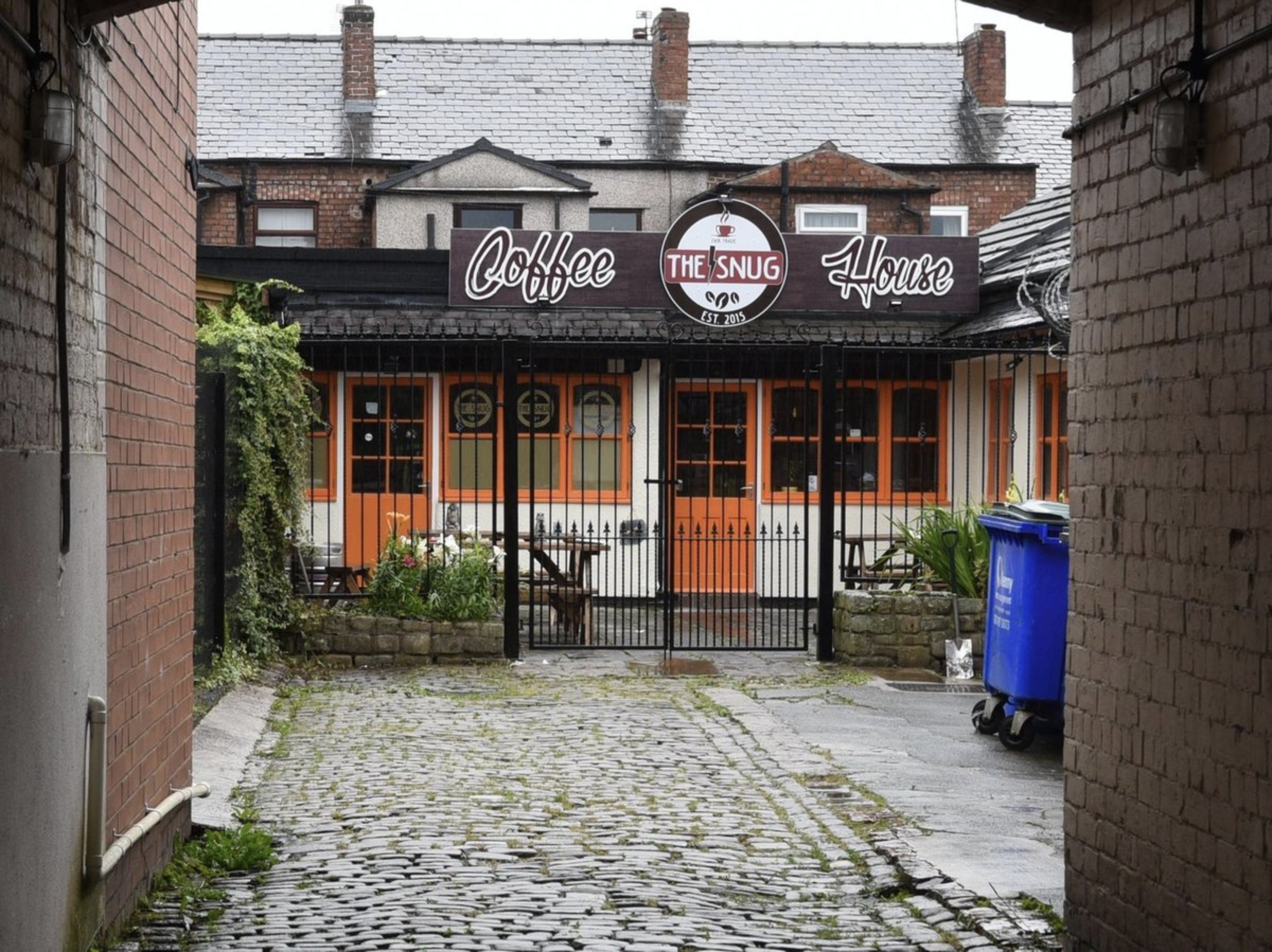
The Snug, Atherton (Greater Manchester, UK)
Background and Origins
Atherton, located in the Wigan borough of Greater Manchester in the United Kingdom, has been historically underserved by cultural and live music provision. Ten years ago, after redundancy from an insurance job in the city center, the founder invested redundancy money to establish a small coffee shop in the town—a place where locals could enjoy good coffee and quality music, at a time when offerings were primarily limited to cover bands.
This venture has grown into a creative hub central to the town’s social fabric, developing a blend of commerce, creativity, and community engagement.
Identifying a Gap: The After Hours Opportunity
In 2022, the UK Shared Prosperity Fund (UK SPF) distributed Levelling Up funding through the Greater Manchester Combined Authority (GMCA), dividing allocations among its ten boroughs. Wigan received funding aimed at encouraging younger residents (16-25) to “disconnect from their phones” and engage with local live music, especially during early evening hours from 5 pm to 8 pm on Fridays.
Wigan's town center was often described as a “ghost town” at this time, especially compared to nearby Manchester, where the city buzzed with activity as people moved on to restaurants and bars. The town's cultural ecosystem was notably sparse—lacking theaters, cinemas, and libraries—resulting in limited nighttime economy and social opportunities.
Recognizing this gap was crucial. The lack of cultural offerings made it difficult to develop a sense of local belonging or encourage evening footfall. Meanwhile, local businesses struggled to attract customers during early evening hours despite opening earlier.
Piloting the Early Doors Club
The £175,000 two-year pilot, known as After Hours, was viewed as a transformational investment for the community. Funds were allocated across four venues, including the coffee shop, a cocktail bar, a church, and the project’s own venue, each receiving approximately £10,000 to upgrade sound and lighting equipment.
The programming focused on early evening live music, creating what came to be known as the Early Doors Club. Events were often scheduled once monthly per venue on Fridays, with performances starting around 6 pm to accommodate local commuting and traffic constraints (notably the heavy 5 pm congestion).
The Early Doors model was designed to:
Provide culturally rich, accessible entertainment before other more traditional nightlife began.
Encourage family participation by accommodating under-18s accompanied by adults, developing intergenerational engagement.
Support venue financial health through a “split-set” performance format, encouraging attendees to visit bars during intermissions, increasing bar sales for venue sustainability.
This approach was well-suited to Wigan’s limited public transport, especially the early end of train and bus services. It provided safe and convenient options for younger audiences, families, and older residents to enjoy live music without the challenges and risks (perceived or real) associated with late-night outings.
Community Impact and Resilience
The cultural programming rapidly became more than just entertainment—it revitalised community spirit and strengthened the local creative ecosystem. The pilot delivered over 100 live music shows across four venues, training local sound engineers, lighting technicians, and videographers, with a strong focus on gender parity in lineups and event staffing.
The church venue, with a 300-seat capacity, experienced a significant boost in bar sales, generating an additional £15,000 in revenue over the past year, helping sustain church operations during otherwise quiet periods. The pilot also enabled smaller venues such as the coffee shop to remain open by attracting regular audiences who otherwise might not have visited.
Data gathered through Eventbrite ticket registrations provided valuable insights into travel patterns and audience demographics, informing funding applications such as successful bids to Arts Council England and ongoing bids to GMCA’s Spirit Fund aimed at expanding reach beyond Wigan into neighboring priority areas.
Building Strong Local Partnerships
A key factor in the programme's success has been its strong, collaborative relationship with Wigan Council. Unlike many grassroots venues, the organisers have cultivated positive connections with local arts and culture departments, facilitating support for additional programming and pop-up events across the borough.
Local businesses also benefit, with coordinated efforts to incentivize post-event visitation through bar and restaurant offers, increasing footfall during typically quiet early evening hours and supporting the wider nighttime economy.
Artist and Audience Engagement
Artists are paid fairly according to Arts Council guidelines, with main support acts receiving fees between £150-500 and headliners up to £1,200. The application process is a mix of open calls and proactive scouting by the organisers, ensuring fresh and diverse lineups that resonate with the community.
The initiative has had positive effects on family dynamics, with parents appreciating safe, early evening opportunities to enjoy music alongside their teenagers—a rare offering in the area. The project also creates pathways for young people to get involved behind the scenes, volunteering and learning technical skills, contributing to their development and sustaining the local music scene.
Challenges and Reflections
Challenges such as five o’clock traffic can occasionally impact artist punctuality and soundcheck times, but strong communication and flexibility have mitigated disruptions. Financially, much of the project team’s workforce is voluntary or under-resourced, reflecting the commitment and passion driving the initiative despite limited funding, and creating a clear need for future development.
Looking ahead, the focus is on expanding programming geographically, and securing larger-scale funding.

PART 5
Conclusion and Final Recommendations
Conclusion from Galva and next steps
John Taylor, Founder, Levitt AMP Galva Concert Series: “A lot of groundwork has been laid. Artists from across the globe see this area as a destination to perform. We have a variety of unique venues and professional sound equipment and people in the area who are passionate about live music. We’ve also established an endowment fund that will provide some level of funding for live music and school outreach forever. The biggest vulnerability we currently have is that, aside from some youth who are paid through a specific grant, the key people making this happen are volunteers. Community ownership and local policies that support these efforts will be what takes things to the next level and really solidifies this area’s identity as an international cultural hub.”
Key recommendations
Short term (0-12 months)
1. Develop Model Policy Guidelines
Create simple, clear guidelines tailored for local government. For example, a draft "Creative Economy Recognition Bylaw" or "Cultural Tourism Investment Policy." Provide step-by-step advice on how the town or county can adopt these policies, including sample resolutions and stakeholder engagement plans.
2. Create an Impact Measurement Framework
Develop a concise framework (or plan) with clear metrics and indicators to measure the impact of music and cultural activities (e.g., economic benefits, community engagement, social cohesion). Examples include attendance growth, tourism revenue linked to music events, local artist income, youth engagement rates, and survey-based wellbeing indicators.
3. Produce an Annual Impact Report or Fact Sheet
Assemble an easy-to-share resource, such as a one-page fact sheet or annual report, to clearly show the different values and outcomes of the music ecosystem. Use data, testimonials, and visual storytelling (photos, infographics) to help policymakers and funders understand the value of the work.
4. Develop a Short Set of Priorities
One of which would include the long term goal of advocating for the town governance to create a bylaw identifying the creative economy as a key priority area – and further up the chain, that Henry County creates a tourism levy whereby 25% of its tourist profit is invested back into local artists. Commit to several of the below recommendations as key points of focus, towards achieving this overarching goal.
5. Map the Music Ecosystem
Catalogue everyone involved in Galva’s music scene including but not limited to venue spaces, musicians, cultural workers, youth leaders, to understand where potential lies. Create a clear stakeholder map that highlights different audience segments and share with the community to raise awareness.
6. Boost Audience Awareness and Engagement
Implement easy ticketing or registration (e.g., Eventbrite) to gather data: tracking attendance and gathering insights on who is coming and how they get around. Explore using combining communications with sponsorship such as a locally designed, printed programme.
7. Pilot Music Education Programs
Collaborate with local schools and visiting musicians to produce workshops, meaning visiting musicians have more work during their trip and the community benefits also.
8. Activate Unexpected Spaces for Music
Use existing parks, green spaces, and unconventional venues (including those rarely experienced by the public) to host concerts and events. This creates excitement around live music outside traditional venues and helps reach new audiences as well as increasing community engagement.
9. Increase Community Involvement
Build stronger partnerships with local government, businesses, and community groups. Bring musicians, cultural advocates, and residents closer together to build community ownership of the music series via the creation of Galva Music Coalition that meets once per month.
10. Expand Program Variety and Engagement Opportunities
Introduce diverse music genres that reflect the broad tastes of the community via for example, a local listening evening, or music quiz to aid intergenerational cohesion. Pair concerts with complementary activities like talks, artist Q&A sessions, or education workshops to deepen audience engagement and build loyalty.
11. Integrate Musicians into Local Advocacy
Ask them for quotes, or videos, supporting the work that is being done in Galva, and to put their name to new fundraising initiatives. I.e. being featured artist on a crowdfunding campaign for a new PA system. Collaborate with the tourism office to tell the story of local artists and highlight their work in tourism / culture campaigns.
Medium Term (1–3 years)
1. Develop Policy Advocacy through Case Studies
Use the case studies (or conduct new case studies) on comparable successful creative economy policies. Use these as advocacy tools to recommend specific policy language, funding models, and governance structures. Share these with local council to build evidence-backed support for policy change.
2. Implement a Community Feedback and Impact Survey System
Regularly survey event attendees, local artists, businesses, and residents to collect qualitative and quantitative data on the broader social, cultural, and economic impacts of the music initiatives. Use this data to refine programs and demonstrate ongoing value to policymakers and partners.
3. Develop a Policy Advisory Committee / Working Group
Establish a dedicated group drawn from community leaders, artists, policymakers, and economic development professionals to support, monitor, and propose music and arts-related policies. This fosters accountability, transparency, and a collaborative environment for policy development and strategic decisions.
4. Diversify and Strengthen Funding Sources
Move beyond reliance on key grants like Levitt by actively seeking a wider range of funding—local corporate sponsorships, community donations, and regional arts grants, where available.
5. Explore Regional Possibilities, including a Touring Circuit
Establish Galva as part of a wider regional circuit connecting music venues, artists, and promoters across nearby towns and cities. This network can increase performance opportunities for local musicians and attract touring artists, stimulating greater cultural exchange and audience growth.
6. Build Music Education and Development Infrastructure
Via a survey or public vote, identify appetite for offering lessons, rehearsal spaces, instrument access, and mentoring programs for children, youth, and adults. Work closely with local schools to integrate music education deeply and coordinate with live events to foster talent pipelines.
7. Expand and Diversify Programming
Introduce more diverse and inclusive music genres reflecting Galva’s heritage and changing demographics. Incorporate participatory music-making activities and cultural celebrations to engage a broader audience base, including regional and visiting artists.
8. Continue to Fundraise and Invest in Physical Infrastructure
Pursue funding and community donations to build or upgrade equipment. Ensure spaces are accessible and welcoming to encourage greater attendance and community use.
9. Leverage Data for Audience Growth
Develop capacity to use digital tools and data analytics to refine audience targeting, marketing campaigns, and content development. Explore streaming and virtual platforms as extensions of live events to reach wider and more diverse audiences.
10. Enhance Local Partnerships and Cross-Sector Collaboration
Deepen relationships with local government, tourism, health, and education sectors to embed the music ecosystem within broader community development plans. Joint initiatives can address social cohesion, community wellbeing, and economic growth through music-led programs.
11. Community Ownership
Develop systems for community participation in governance and programming decisions, increasing local ownership and long-term commitment. Encourage volunteerism and leadership development among residents, musicians, and venue operators.
12. Create an Integrated Cultural Calendar and Hub
Build a shared platform or hub i.e. using Google that connects all local music and cultural activities, offering centralized information, ticketing, and promotion to simplify access and enhance collaboration across the ecosystem – including the Galva Music Coalition meetings in this.
Long term (3-5+ years)
1. Create a Cultural Policy or Strategic Plan
Collaborate with Henry County and Galva’s leadership to create a comprehensive cultural policy or strategic plan explicitly embedding music and the creative economy priorities. This should include clear goals, funding mechanisms like the tourism levy, and cross-sector integration.
2. Establish Clear Accountability and Reporting Mechanisms
Embed annual reporting requirements into the policy/budget cycles that track impact. This ensures transparency, continuous evaluation, and strong communication of successes and challenges to the public and decision makers.
3. Launch an Economic Impact Dashboard
Develop an online, publicly accessible dashboard that integrates data from music events, tourism, local economy, and community wellbeing. Real-time dashboards with intuitive visualizations can help articulate the ongoing importance of the music ecosystem and policy benefits.
4. Position Galva as a Regional Cultural Destination
Position the concert series and wider music ecosystem as a key cultural attraction drawing visitors from the region and beyond. With the tourist board of Henry County, develop strong tourism partnerships that integrate live music with local heritage, hospitality, and retail to boost economic impact. Advocate for the creation of a bylaw identifying the creative economy as a key priority area – and at county level, that Henry County creates a tourism levy whereby 25% of its tourist profit is invested back into local artists.
5. Dedicated Creative Spaces
Develop or acquire new, seasonal, or permanent, multi-use spaces within Galva. These spaces should cater to diverse musical genres and community needs, offering both programming and rehearsal facilities to retain and nurture local talent.
6. Institutionalize Community-Led Governance and Ownership
Grow community governance structures that place residents, artists, and local stakeholders at the heart of decision-making. Galva Music Coalition has at this point become well established and active across the region.
7. Cross-Sectoral Policy Integration
Collaborate with healthcare, education, tourism, and economic development sectors to position Galva’s music ecosystem as a driver of wellbeing, social cohesion and local economic growth, integrated throughout other sectors.
8. Music Education as a Lifelong Pillar
Link formal schooling with community programs and professional development. Support artist mentorship and training programs to cultivate the next generation of creative leaders.