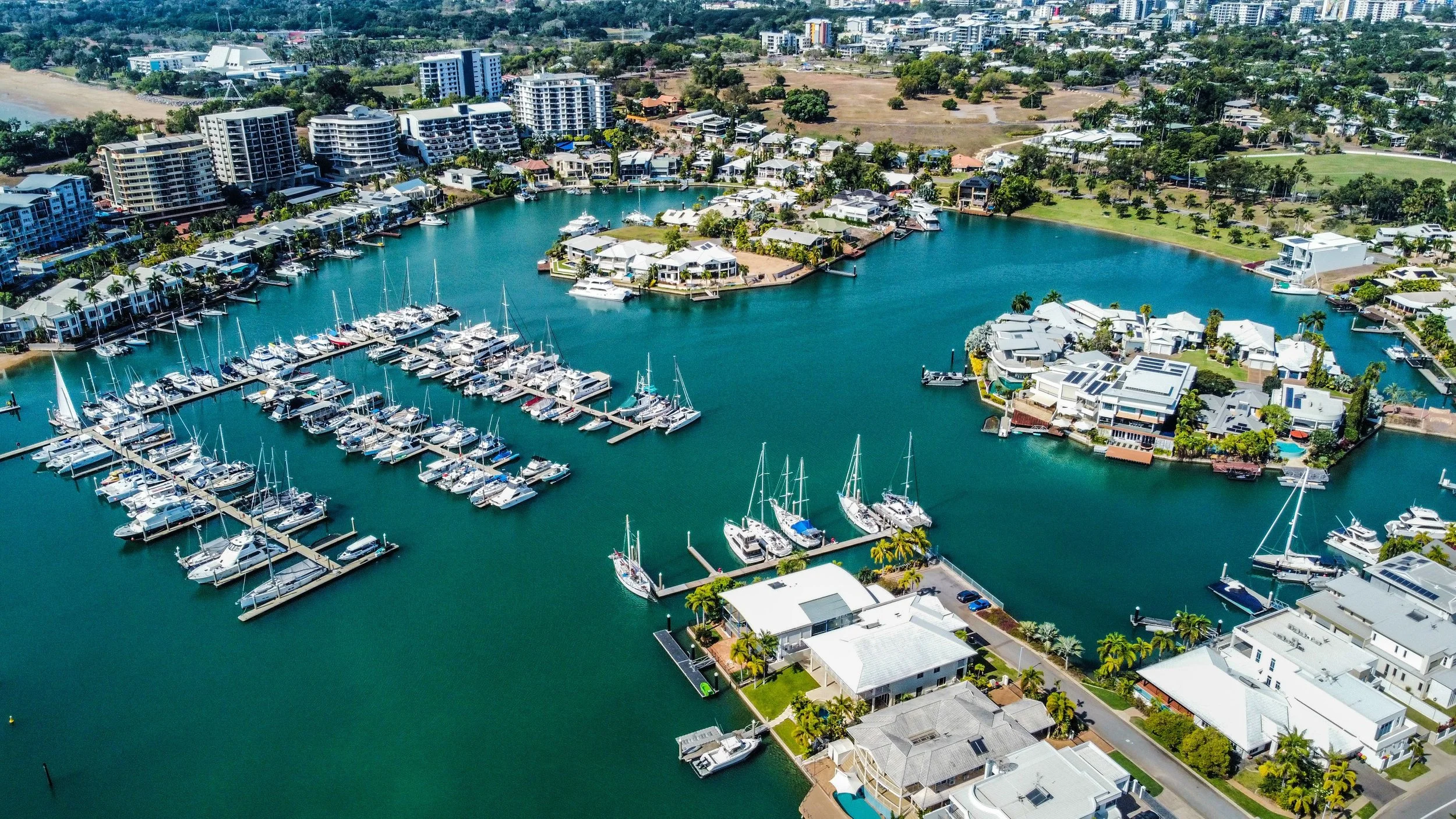
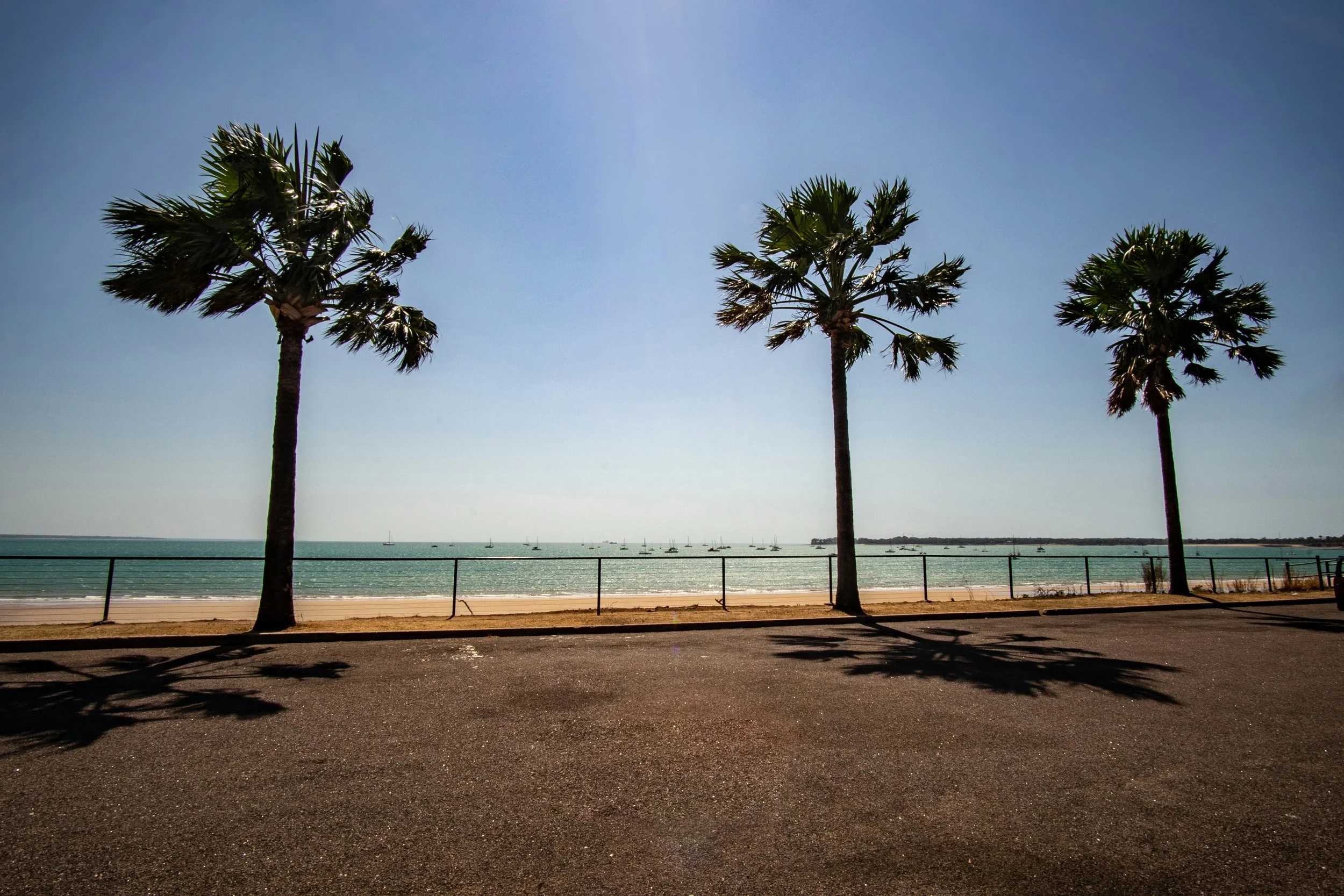
Darwin, Australia
Empowering global communities via the advancement of music policy
1. Introduction
The Center for Music Ecosystems is privileged to lead The Music Policy Resilience Network into its third year, as the program continues to develop and demonstrate its relevance to participating towns, cities, and communities, as well as providing broader benefits to those able to gain from the findings and recommendations presented in this report and the accompanying reports for all participating cities.
The Music Policy Resilience Network emphasizes the role and impact of music ecosystem policy, focusing on how it can be effectively utilized in small, mid-sized, and geographically isolated communities, as well as among those who consider themselves geographical ‘outliers,’ increasing their resilience and resistance to internal and external shocks and disturbances, and enabling them to develop not just in the field of music policy, but across various related policy areas, as befitting need. The work examines how resilience is currently embedded in the music ecosystems of the participating towns and cities, identifies areas requiring further development, demonstrates international best practice case studies, and concludes with a series of actionable recommendations, tailored to each location.
The Music Policy Resilience Network merges both research and practice via the following activities:
Monthly 1.5 hour online masterclasses and workshops focussing on topics requested by members, including ‘Empowering the Artist in the Community’; ‘Music and Tourism’; ‘An Introduction to Music Policy’; ‘The Power of Networks’; and more
1:1 research with cities and stakeholders with an assigned expert consultant, achieved through a combination of literature review, data analysis, stakeholder analysis (interviews, focus groups, written exchanges, surveys, mapping exercises, and more) culminating in a written and freely available report with recommendations
Access to the Music Policy Resilience Network online platform, and direct links with all network members
Opportunities for peer review of ongoing music policy and related projects by other members of the network
Measuring research impact and prospective next steps in each of the communities
Lifetime membership of the network (including access to the online platform and monthly masterclasses).
Join the Network
The Music Policy Resilience Network has evolved into a rolling programme, with towns, cities and communities able to join at any point throughout the year. Contact us to express your interest: info@centerformusicecosystems.com
2. Context
Darwin is the capital city of the Northern Territory (NT), in Australia, the historical Larrakia region. The Larrakia people are the traditional owners of the Darwin area, and Aboriginal people are a significant proportion of the population.
Located on the Timor Sea, it is also the largest city in the sparsely populated NT, and it is the smallest and most northerly Australian capital city with a population of approximately 139,902 (2021 census).
Darwin’s tropical climate dictates much of the city’s life, with two very different seasons – wet and dry. During the dry season, the city’s clear skies and mild sea breezes make it a tourist hotspot and its proximity to Southeast Asia makes it a key link between Australia and countries such as Indonesia and Timor-Leste.
This geographical position also makes Darwin the main service centre for a wide range of industries including mining, offshore oil and gas production, tourism and tropical horticulture, while the Port of Darwin is also the main outlet for Australia’s live cattle export trade into South-East Asia.
The population of Darwin is very diverse, and the city has developed into a vibrant, dynamic modern capital city –the city’s modern outline is due to the large-scale reconstruction following Cyclone Tracy in December 1974 – offering a wide range of accommodation, cafes, restaurants, and nightlife options. Darwin is also the home of Charles Darwin University, the NT’s central university, something that keeps the population of the city young.
Darwin's culture is a vibrant mix of Aboriginal traditions, multicultural influences, and a unique "Top End" spirit. It's known for its diverse population – a mix of over 60 nationalities and 70 different ethnic backgrounds, a strong Aboriginal presence, and a blend of urban and outback experiences. With regards to its music ecosystem, Darwin is the most important music hub in the NT. While the city does offer different events in size, and has a variety of venues, the strong presence of tourism determines the degree of experimentation in the scene and the support of public administration is still scarce. With local elections just around the corner, the capacity of the music sector to demonstrate its value and role towards other societal challenges such as crime or youth development will be crucial.
3. Deliverables
PHASE 1
Stakeholder engagement
Five in-depth interviews with five key stakeholders and development of a clear outline of key cross-sector priorities.
PHASE 2
Three best practice international case studies
Three best practice international case studies on the topics of night time economy and governance (1), exchange programmes and showcase festivals in remote areas (2); and innovative local government support and advocacy for music (3).
4. Methodology
This work has been carried out through a combination of desk research and qualitative interviews, focusing especially in an active involvement of the city contact in the whole process, to maximize the impact and value of the work while it was being produced. The result aims to be a synthesis of this process of work, containing the key findings and possible directions for action.
This work was produced in close collaboration with Mark Smith, whose extensive knowledge of the Northern Territory’s music landscape and the availability and willingness to support on and join all interviews incredibly enriched the content of this work.
PHASE 1
Stakeholder Engagement
Context and Introduction
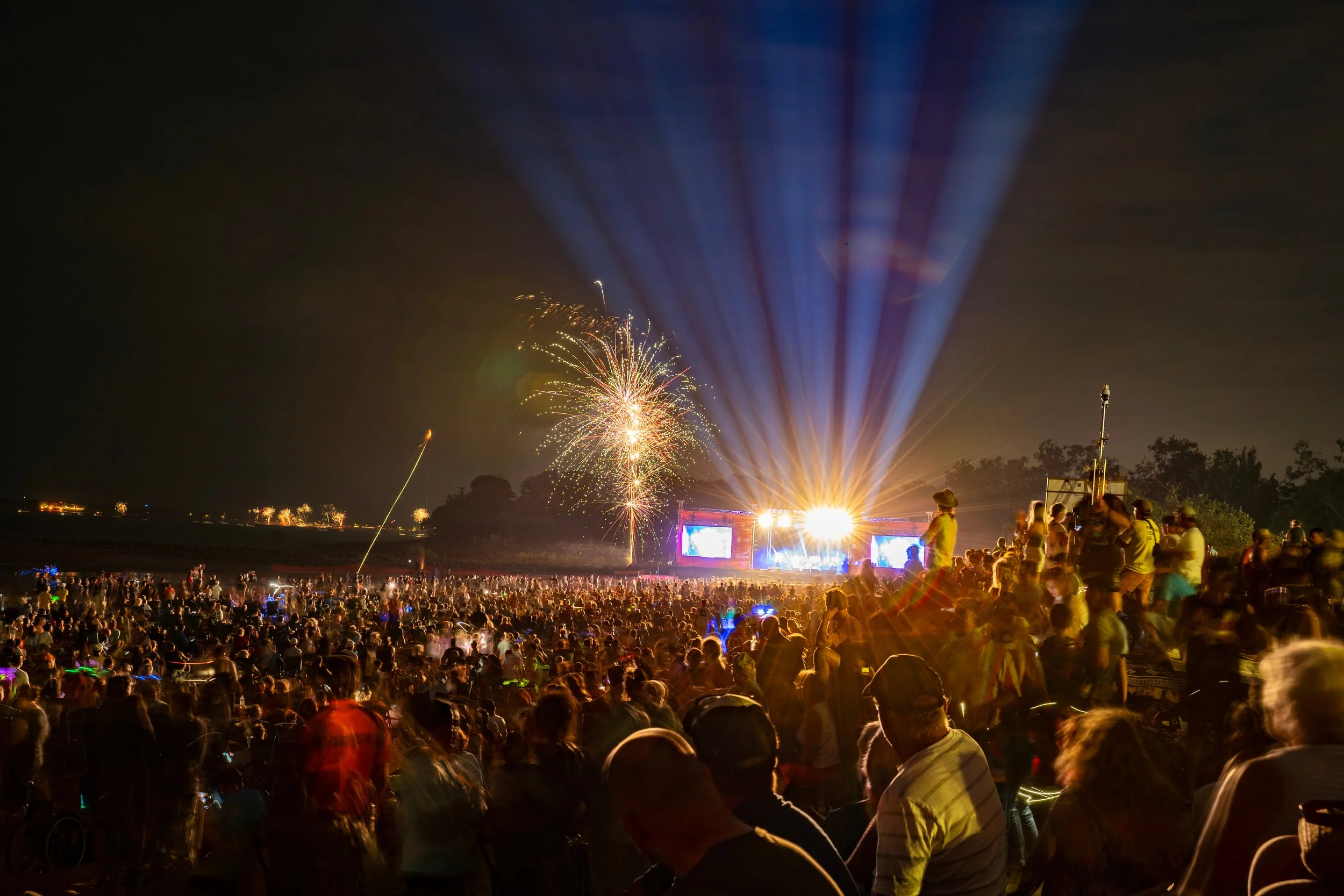
The first phase of MPRN research in Darwin was a preliminary listening exercise to determine shared challenges, gaps and desired directions between key actors in Darwin’s music ecosystem, which took place through a series of in-depth interviews at the start of 2025 and resulted in the following key challenges and possible futures.
Key Challenges
1. Professionalisation and knowledge building
There exists a general agreement amongst all interviewees that there is a lack of opportunities for professional growth in Darwin.
While the city functions as a centre within the remote Northern Territory, and all elements of the music ecosystem are present – venues, performers, promoters, etc. – the assumption that the entirety of the Australian music industry is focused on the East Coast causes two main challenges. On the one hand, a brain drain, where qualified professionals abandon the Northern Territory to seek jobs elsewhere in the country (especially artists, who feel that “if they don’t move to Sydney or Melbourne they won’t make it”); and on the other, a “big fish in a small pond effect”, where the smaller size of the ecosystem often means artists are able to reach quick popularity but lack diverse experiences that can help them improve in their career.
This brain drain and the lack of diverse training experiences also provoke a lack of NT-based role-models that can become valuable sources of knowledge for upcoming artists, managers, and professionals in the industry. In light of the lack of personal experiences, the youth often resort to online information, but the Internet does not guarantee the knowledge and survival skills needed to navigate the industry. This is also strongly related to providing more opportunities for performance, and larger flexibility to organise shows and innovative programming; and also more visibility among the different stakeholders part of the ecosystem – labels, promoters, managers, operators…
Focusing on increasing the offer for qualified jobs in the NT also needs to be managed smartly, interviewees point out, since welcoming outsiders can be a great benefit to enrich the local ecosystem, but it cannot mean restricting access to those professional experiences by locals. This is particularly important in the case of First Nations. Artists from indigenous communities, while the artistic quality of their work is incredible, often lack the guidance and technical support for artistic development from a managerial and business points of view.
Lastly, another key element in Darwin is the seasonality of the offer, that causes strong concentration of events in only a couple of months during the year. While that brings programming challenges specifically, it also diminishes the demand for year-round demand for artist and other stakeholders in the industry.
TIPS AND REFERENCES
Financial support schemes for high and low seasonality of cultural workers: Intermittents du Spectacle (FR); Kulturaliansen (SE); artists basic income pilot scheme (IE).
KEY QUOTES
Leah Flanagan, Musician and Director at APRA AMCOS: “There is an imbalance between emerging curators and/or art administrators interstate coming to Darwin being employed in high profile jobs, when there are plenty of qualified professionals in the NT that have been working in the industry for a long time who could be employed in those positions. There’s no collaboration sought, nor opportunities. There is a lack of First Nations people from the NT in cultural programming roles.”
Danielle Jones, Event Promoter, SRO Events: “I think a lot of people come here and get professional experience, but then once they have that under their belt they're moving interstate for bigger and better opportunities. I think that, unfortunately, often there comes a point for people in Darwin and the whole of the Northern Territory that their career hits a point where there's no further growth.”
James Mangohig, Freelance producer and creative director: “In the music industry, life experiences are very important learning grounds. It becomes really hard for artists when they haven’t had access to that due to the pandemic or because the music industry has gotten harder as a whole.”
2. Renovation in power positions
There’s a striking agreement amongst all interviewees that the power positions in the industry need to be renovated. There need to be changes, they all argue, in venue management, radio governance, and festival curation. Renovation is not only necessary from a point of view of artistic direction, but also on social consciousness, diversity and access of younger generations.
Some interviewees also argue that many people in power lack the technical and context knowledge to understand the concerns, needs and pressures of the sector. They also point to the fact that often power and legitimacy within the scene are associated with having relationships with landmark organisations or people that have become big players in the industry – something that can become problematic if that is the only way that respect and power can be gained in the local scene.
KEY QUOTE
Shauna Upton, Barkly Regional Arts & 8CCC Community Radio: “There’s too much gate-keeping.”
James Mangohig, Freelance producer and creative director: “We need new faces and new ideas – we need to update who has access and control over the scene.”
3. Culture-for-free mentality
The culture-for-free mentality is a longstanding challenge of the cultural scene at large. While there is an unarguable need for public funding for the cultural sector, especially dedicated to financially sustain a commercially-inviable offer that would otherwise never be programmed, this needs to go hand in hand with audience building, for people to understand the value of music and dignify the work of all professionals in the ecosystem.
This mediation between public funding and fair pay by consumers is an ongoing work that demands education, but also access and exposure. Some interviewees also point to a difficult vicious cycle: “it’s not just diversity of venues, but also of audiences,” they say, “it’s hard for people to continuously pay for the same bands, but the bands need to continuously play to get better.”
This challenge is particularly tricky in the case of promoters, who often juggle between needing artists who sell tickets to put up a show –and a certain element of newness is often needed for this– but who also have to carry the financial risks of that newness. In that sense, they argue, the availability of offer can sometimes mean a lack of support from the public.
4. Diversification in programming
All interviewees agree there’s a need for more diverse, innovative and exciting programming in Darwin. While there are several reasons for this lack of innovation, generally the feeling is that this lack of diversity is also strongly tied to the lack of renovation in power positions discussed above, as well as a series of bureaucratic constraints in relation to licenses and venue operation.
Given the importance of diverse programming for a healthy ecosystem as a whole, this theme was quite prominent in all interviews, and participants presented a series of key thoughts on the matter:
Pubs cater to tourists and are often cliché in their offer, so often they are not doing everything they could in terms of programming. There is room to maxmise the use of resources for other types of programs, increase multidisciplinary collaboration, and cater to locals as well as foreigners.
Space is not used innovatively, music could be programmed in other places, beyond the pubs, which is already happening with pop-ups for instance. While these are important, there need to be more permanent ways of offering flexible use of space, and multidisciplinary approaches also need to come to the forefront.
Local festivals and radios can do better. There is room to program more local music and create more synergies between out-of-town acts and regional artists.
Promotion needs to become more of a priority, to ensure people do find out about events and places they could be interested in, and to avoid leakage – losing people that would be interested in the scene to other events or places.
Local, indigenous music and original music from the NT need to be brought to the forefront and access to them needs to be normalised, not tokenised, to ensure easy exposure to these sounds.
KEY QUOTE
Leah Flanagan, Musician and Director at APRA AMCOS: “There are some really nice, independent, underground initiatives that are programming music outside of the CBD licensed venues. They’re taking audiences outside of those traditional venues and engaging audiences that prefer to see their live entertainment in spaces that are considered ‘safer’ and friendly across ages and cultural demographics. So there's not a lack of audience or facility, it's just enabling access.”
Danielle Jones, Event Promoter, SRO Events: “A lot of decisions boil down to what's going to make money and what's going to sell tickets for an event to be commercially viable. And that unfortunately isn't always the best decision for the industry and local artists and doesn't enable us as a whole to be as innovative as we would like to be.”
Shauna Upton, Barkly Regional Arts & 8CCC Community Radio: “Bring in young people fresh from high school to run a community radio station – wouldn't that be revolutionary? Put Bass in the Grass and all of those big ones out to tender; and let a woman have a go, let a First Nations person have a try at it.”
5. Centering and uplifting First Nations knowledge, music and stories
Australia’s Northern Territory is an incredibly diverse area, with several interviewees reporting very close relationships between First Nations and other inhabitants of the region – something that does not happen elsewhere in Australia. The Aboriginal cultural heritage is a key part of the NT’s cultural DNA, yet participants agree that it is not being nurtured enough.
On the one hand, there is a need for localised, sensitive PR efforts that can translate the value of the region’s cultural heritage in accessible terms, highlighting it to regional, national and international audiences. Labelling Aboriginal music as simply “local” or “indigenous” flattens the complexity of its sound and the depth of its stories, also feeding into a global trend that simplifies the layered identities of First Nations worldwide.
In the process of centering indigenous music, tokenising and cultural appropriation remain important risks, hence why key players like ambassadors (role-models) and Aboriginal-run and owned labels are key. On this front, some interviewees highlight the importance of long-term, small dissemination and empowerment work, for instance through the work of Music NT’s programme Desert Divas.
KEY QUOTES
Leah Flanagan, Musician and Director at APRA AMCOS: “In the NT, we don't have people working in influential and government-funded positions that can adequately articulate the value of our unique cultural and musical heritage and its importance in the wider domestic and global markets. Until that changes, locally based artists and the art they make will continue to be undermined and underpaid, rather than being treated as global artists who live locally.”
Catherine Satour, Chair of Indigenous Women in Music Northern Territory: “Indigenous music isn’t a genre – it's a dynamic music landscape that is really special, diverse and nuanced. And a great part of its success is the result of the affirmative action and progressive work that has happened to fight racism, in the first instance, and then sexism in the second instance.”
James Mangohig, Freelance producer and creative director: “There's a certain level of trauma that comes from working with people from different communities who have not been empowered over the years. You have to manage people's expectations. You have to manage cultural differences. You have to manage cultural safety.”
6. Innovation in funding
Like in many other places part of this project, several aspects of the funding system and standard practices in compensation for culture need to be updated. The small size of the ecosystem, the difficulties caused by the strong seasonality in the work, and the lack of interest in subsidizing innovative practices are some of the reasons pushing for this change.
Interviewees presented a series of key points and strategies on this matter:
Public funding for commercial venues should be restricted to subsidising local musicians and bands, so that this type of funding is only accessible when directed towards “programming local talent, not generic cover bands only”.
There’s a need for Darwin and NT-based festivals to invest in commissioning new work: festivals and events commissioning new work from participant artists is an interesting model to encourage and support creation. “This leads to an IP-ownership conversion, but it is important to have it if this can leverage access to larger audiences and increase promotional impact”, says one interviewee.
The artistic direction of festivals, key venues or broadcasting agencies needs to be decided through public competition, in order to avoid conflicts of interest, promote fairness in access to opportunities and diversify the artistic direction of key organisations and players in the scene.
Funding for export, including within the territory, should be explored, for example through caps, resident discounts or other measures that assist in covering the cost of travelling within the NT, and ideally the whole of Australia.
Risk sharing mechanisms between booking agents, event promoters, organisers, and public administration would be valuable in order for promoters not to bear all the risks of diversifying the programming.
TIPS AND REFERENCES
Financial support schemes for venues to limit pressure for ticket sales: Regionale Spillesteder (DK), Music Venue Trust Revive Live campaign (UK).
KEY QUOTE
Danielle Jones, Event Promoter, SRO Events: “We’ve previously had several discussions around the idea of an 'event insurance' style policy. The intent of such a policy would not be to cover the full cost of an event or require a payout if the event is commercially successful, but rather to assist with mitigating the financial risk associated with event delivery. Specifically, it would provide a safety net to cover an agreed shortfall amount should the event underperform. Many events and shows are unable to proceed due to the high financial risk involved. A policy of this nature would offer a level of security and confidence for businesses, potentially enabling more events to go ahead that may otherwise be deemed too financially risky.”
7. Facilities, access to infrastructure and travel barriers
While the reduction of travel barriers is indeed one of the key recurrent themes (that also significantly affects Indigenous communities in particular), there are other remarks interviewees made in relation to infrastructure.
With regards to access to facilities, participants in this research highlighted the need for a network approach to supplying the needs of artists and other parties in the ecosystem. Inter-state collaborations and shared efforts, also among different sectors, can result in gaining access to existing infrastructure previously untapped, or in using facilities traditionally only used for other arts or activities.
On the other hand, while the small size of the ecosystem means there cannot be large numbers of all the different stakeholders that make it up (labels, managers, etc.), some interviewees pointed out the need for key elements, for example a commercial studio – referring to Arnhem Land as a best case for innovative artistic creation in a new facility with multidisciplinary organisation – and repair centres.
KEY QUOTE
Leah Flanagan, Musician and Director at APRA AMCOS: “There’s no commercial studio, and the need for a commercial studio is just as great as for stages where to play on. It is really crucial to have better, innovative, state-of-the-art facilities that can take artistic production to the next level and attract talent.”
Possible futures and strategies
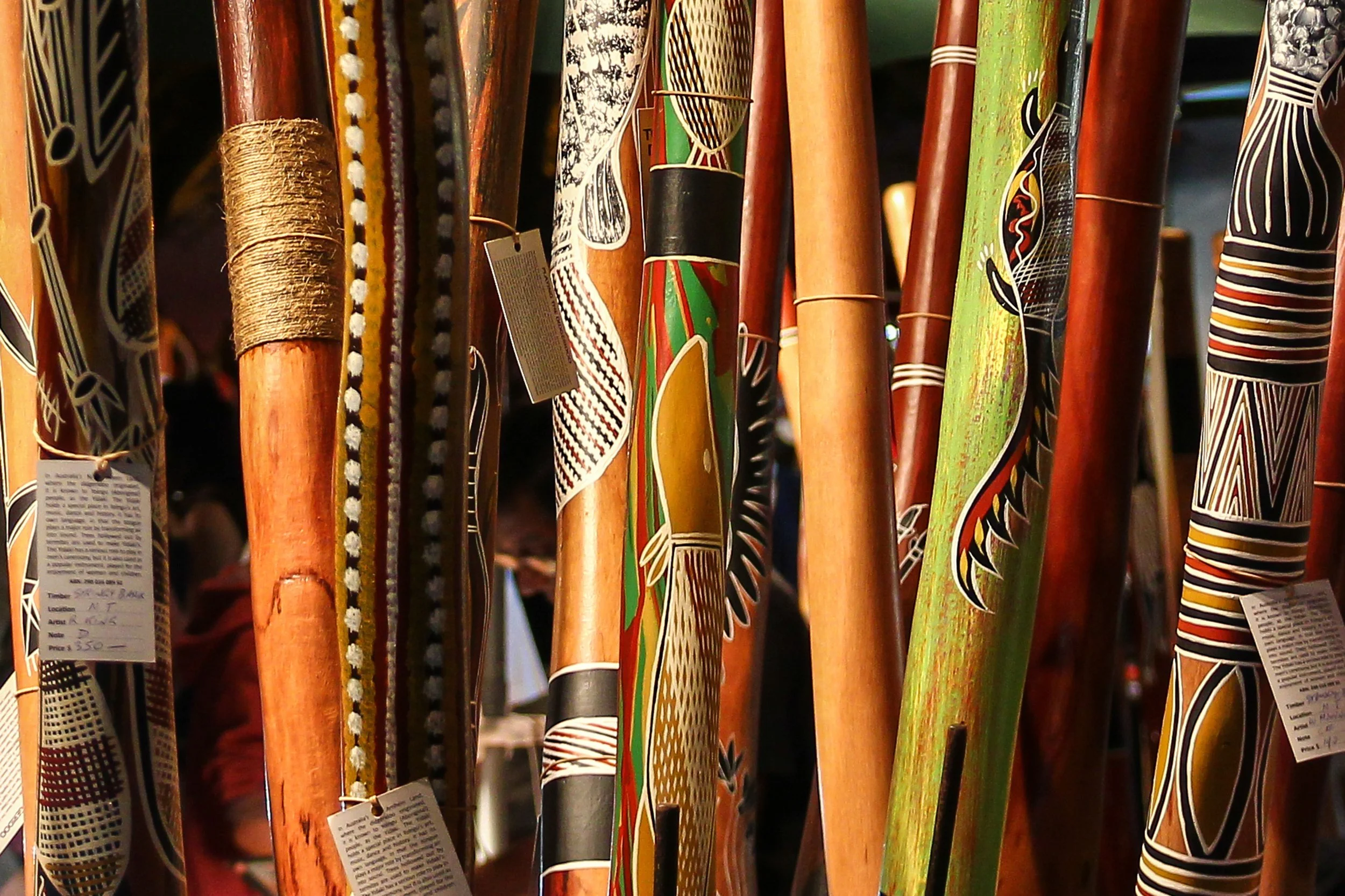
While these types of interviews based on gaps, weaknesses and needs, can often lean towards a feeling of “doom and gloom”, in all exchanges with participants of this research there were interesting and optimistic next steps, potential solutions and action points.
1. Strengthening the local community
Creating a dialogue between actors, audiences, organizations, spaces. The ecosystem is small, which means that different actors in the scene are close already – continuously fostering a stronger, safer scene that anchors projects is key. Contextual elements like compulsory university unionism, for example, have had an impact on the closeness and accessibility of the music scene in Darwin – what are other options to create that? Models like open jam sessions have proven very useful in other communities, for instance.Focus group participants highlighted traits that could boost music and cultural tourism: Cuenca’s walkability and compact scale make it easy to explore on foot; its tranquil atmosphere offers intimate cultural experiences; and its Andean climate is “spring-like year-round” . Its location in the southern Andes, connected by interprovincial roads and flights, also makes it accessible for short regional trips.
In that sense, utilising the regional element in Darwin is key: the accessibility and proximity of the place, but also its special characteristics, that are widely recognised, to foster a sense of ownership among the different stakeholders, increasing diverse participation and allowing artistic cross-pollination.
2. Beyond the pub: increasing flexible use of spaces
This point has been addressed in the previous section, but it remains one of the best ways to have a tangible impact in terms of diversifying programming and reaching new audiences: diversify the sizes of venues, program music in places that are not regular venues, utilise public spaces, create a database of spaces that are “ready-to-roll” for a performance – that is, that have the technical and logistics elements to host a performance easily at reach.
3. Exploring music tourism as a way to sustainably strengthen the scene
The development of the tourism industry, its priorities and the skills needed are being looked at from an outsider looking in perspective, rather than a local focus, some interviewees argue. There is a lot of room for Darwin to identify which needs of the sector sustainable forms of tourism could have a positive impact on – for instance through bringing international acts, creating exchange programmes, and showcasing local cultural heritage, or finding ways to break the seasonality of the pace. When done from an insider looking out perspective, the value of these forms of exchange amplifies. From the point of view of the government, there is also room for public administration to better understand the possibilities of music as an attraction.
4. Strengthening music education
Music education is always a fantastic springboard from which to improve the ecosystem as a whole, and in many directions: role-models for children from an early age, cross-pollination through collaborations with other artforms, fair opportunities for teachers, use of physical infrastructure outside teaching hours, fostering auto-didactic forms of learning, space for alternative rehearsing, etc.This mindset, common across Latin America, treats heritage as “valuable but untouchable,” limiting how artists and communities can engage with it. Opening these spaces to respectful cultural encounters — rather than appropriation — would allow heritage to remain alive and relevant, while fostering pride and dialogue between generations. By making archiving processes more flexible and participatory, Cuenca could transform plazas, cloisters, and archives into living stages where history and contemporary creativity coexist.
During these interviews, some participants highlighted a decay in the quality of music education in Darwin, while others pointed at the fact that music education is “practically non-existing outside of Alice Springs and Darwin”.
KEY QUOTE
James Mangohig, Freelance producer and creative director: “Music classes in schools, high schools and the university used to be led by industry professionals and incredible musicians and artists – the impact these people have on classrooms of 10 yo kids is massive.”
PHASE 2
Three best practice international case studies
Context and Introduction
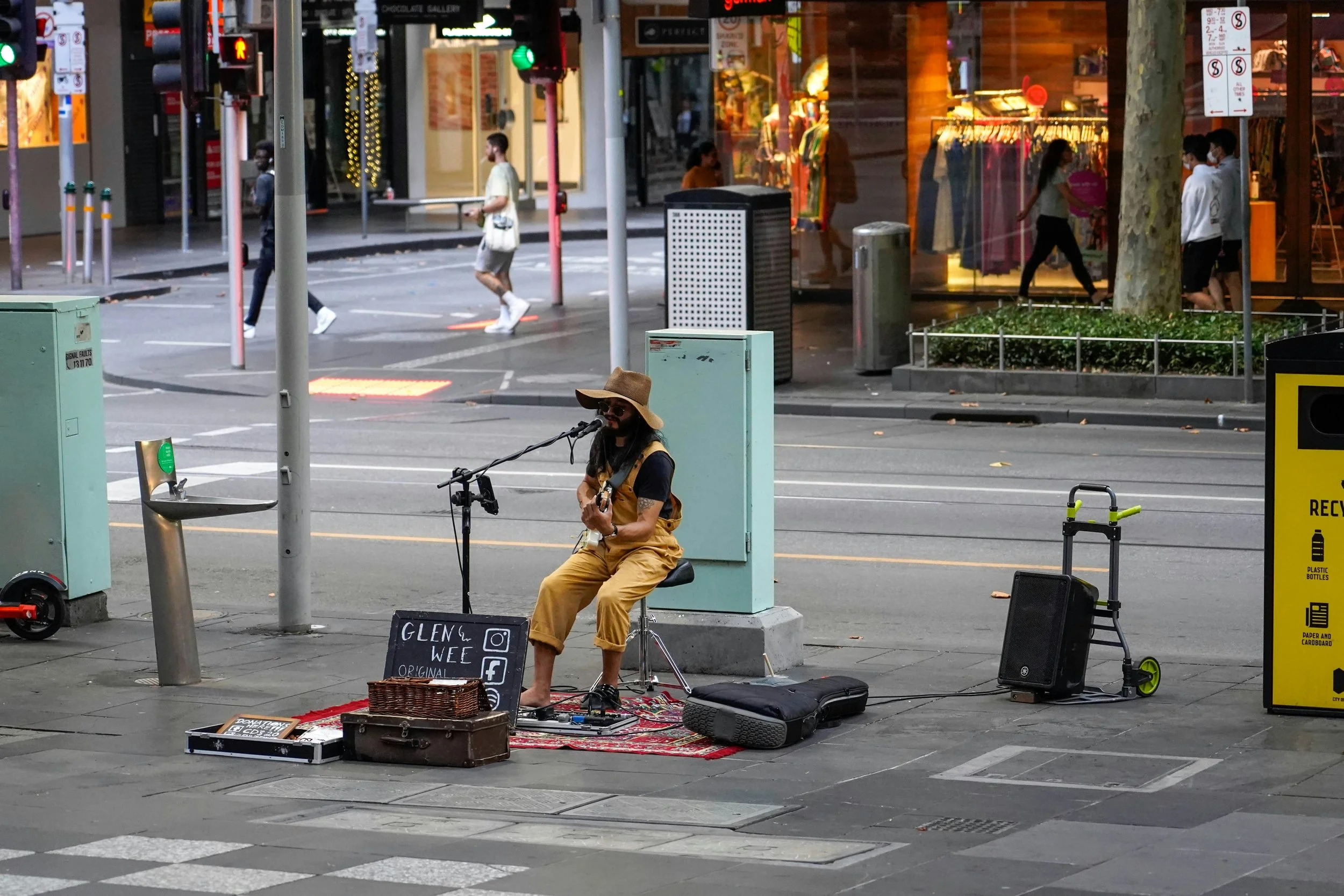
The second part of this work comprises three reference case-studies in three areas of focus for Darwin’s music ecosystem, namely: night time economy, exchange programmes and showcase festivals in remote areas; and innovative local government support and advocacy for music.
CASE STUDY 1
Outlining the value of cultural scenes for the night time economy
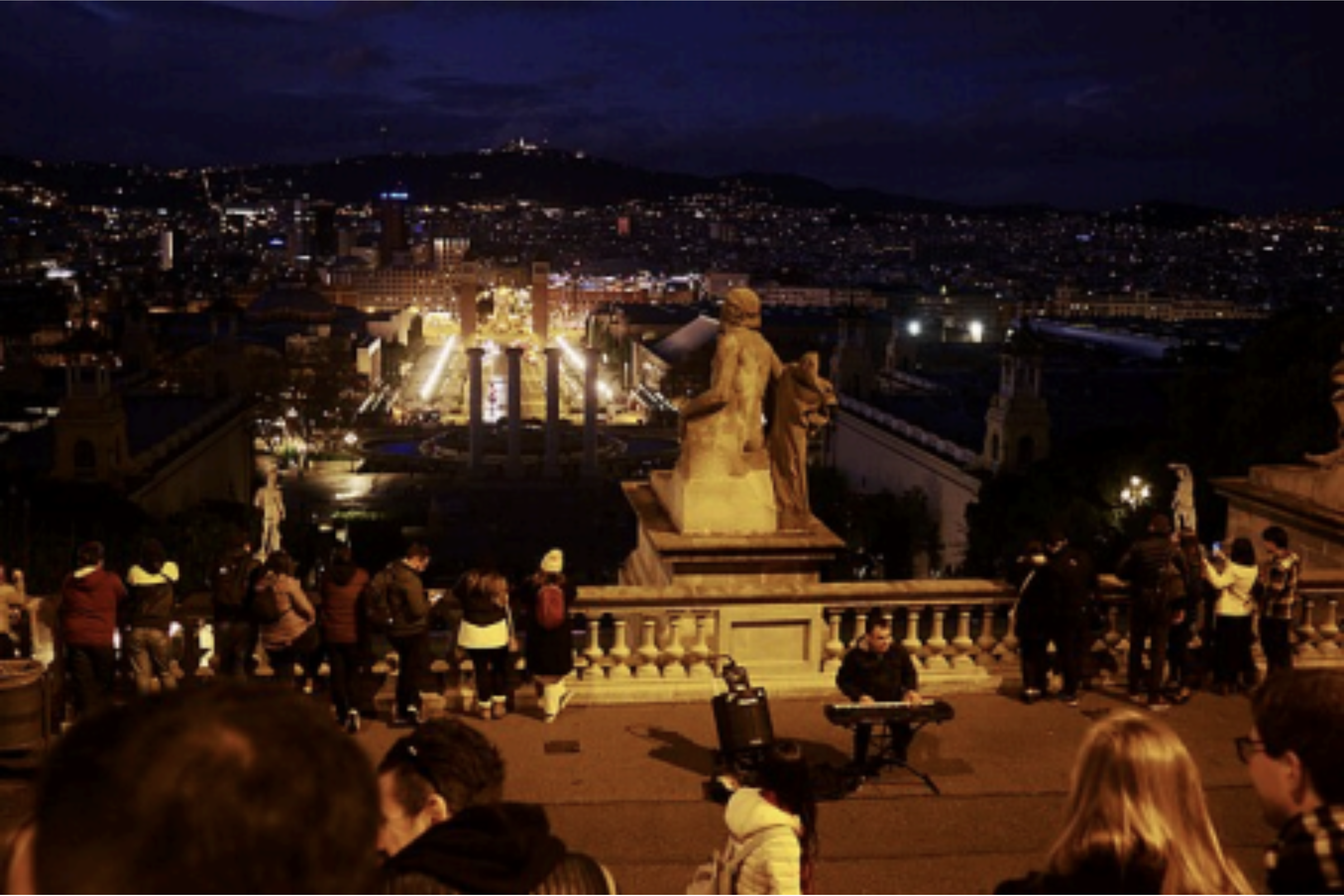
Barcelona at night, December 2019. Credit: Nicolas Vigier.
Barcelona Night Strategy (Barcelona, Spain)
Pioneered in the field of urbanism and urban governance by Andreina Seijas, the night time economy focus offers a new lens through which to seek partnerships with the hospitality and small business industry in Darwin, something that has the potential for larger impact in the context of upcoming elections in the city.
About Barcelona’s Night Strategy
In autumn 2024, Barcelona named a night commissioner, Carmen Zapata, a role tasked with the coordination and execution of the action plan approved by the Citizens' Committee for a Safe and Civic Nightlife. The organisation, formed by 80 agents, launched the action plan in the last quarter of 2021 to address, from a comprehensive perspective, nighttime activities in the city.
Zapata’s role is to respond to the needs of citizens in relation to night life in the city and identify any necessary updates on public policies and regulations related to the city's nightlife. Alongside her work, and within the framework of this new nightlife governance system, the city of Barcelona has also set up the Barcelona Nightlife Council, a body for citizen participation and dialogue, and the Permanent Commission of the Nightlife Council, an executive body.
These include different areas of the Barcelona City Council, headed by the Department of Safety, Prevention and Coexistence, as well as representatives of the political groups of the municipal corporation, the Ministry of Interior of the Regional Government of Catalonia, the Mossos d'Esquadra (local police), neighborhood and citizens' organizations and associations, and members of different unions and federations of hospitality operators, restaurants and nightlife.
An interview with Andreina Seijas, expert in night time governance and consultant to the Barcelona City Council: how developing a night time strategy can unlock new partnerships and shed light on existing gaps of knowledge in cities.
“So many cities are making the mistake of appointing a night mayor, and then fail in achieving the results they were hoping for because the figure does not have the right tools or the needed regulatory power” Seijas explained. “Before you go into executing or discussing a governance model, you need to have the data at hand. There is a collaborative process for shaping a vision that goes first”.
According to Seijas, the process to develop a night time governance strategy is three-fold: vision, inventory and model. Only after those steps have been completed does it make sense to roll out the strategy and action plan, and start execution.
“In Barcelona, where I’m based and I’ve worked putting together a night vision for the city, the work was triggered by some issues around the use of public space at night and noise complaints by residents.” While that was happening in the context of the Covid-19 pandemic, it did set the stage to begin a stakeholder mapping during which the city identified the different actors, their interests, and plotted onto the map of the whole city where nighttime activity was taking place, and where it wasn’t.
“We identified the different agendas of the different groups, and started from the key priorities that most groups had in common”, Seijas explained. “And after that, we moved into doing an inventory, mapping the city’s assets, where they were, how they took place… And once we had all that information, all that data, that’s when we sat down and asked ourselves what was it that the city needed”.
This way of phasing the work, of not sparing complex, lengthy data-collection phases and co-creation processes, is key to set a strong foundation and to create new alliances between partners and city actors, especially those who are not used to working together.
“Another important layer here is the remoteness of places, their low density. From a cultural perspective, the need to share the financial risks of the offer is important, but there are several interesting models for this: from tourism levies, to hospitality tax reuse.” Seijas explained, acknowledging that the remoteness of places like Darwin creates more challenges on this front.

Key learnings and important points of connection for Darwin:
Before defining a governance model, assets must be mapped. And cities are very interested in data – in fact it’s the aggregation of different data points and elements that are related to each other that can be useful to tell a specific story.
The decision on which governance model to choose needs to be based on the local resources. There are various different models of night time governance that serve different purposes: from night mayors, to whole councils with different sectors represented. The choice of which one to use in a city is important for their liveability and impact.
If the push is not coming from the city you need champions from the community. And ideally, it's not only the businesses that have a direct commercial interest in this, but also some sort of partnership or alliance, especially between diverse stakeholders.
Alliances between usual and unusual suspects are key. Almost every actor and sector has a role in the 24-h cycle of the city. Fostering exchange between actors that don’t usually collaborate, but that can have common interests when it comes to the night time economy or the entertainment industry is crucial.
Telling the right story to the city matters. Populated by misconceptions and prejudices, the night has long remained the realm of reactive and repressive measures, instead of approaches harnessing its full potential. If there are interesting activities or initiatives already taking place organically in the city, those are the stories that need highlighting before the government officials.
Festivals have the power to affect the behaviour of visitors. Festivals play a very important role in shaping local realities: they can be used, for example, as a platform to push for changing some behaviours that are not welcome from visitors, or as a channel to disseminate specific values, particularly through communication campaigns.
Involving younger generations is crucial. Younger generations are worried about the future and interested in creating change – they are agents of change, and will get involved if and when given the right space to do so.
Looking at the city with a night time lens means more than safety. It's not just safety and it's not just economic input, there's so much more: cultural resilience, inclusiveness, also even environmental sustainability.
CASE STUDY 2
Exchange programmes and showcase festivals in remote areas
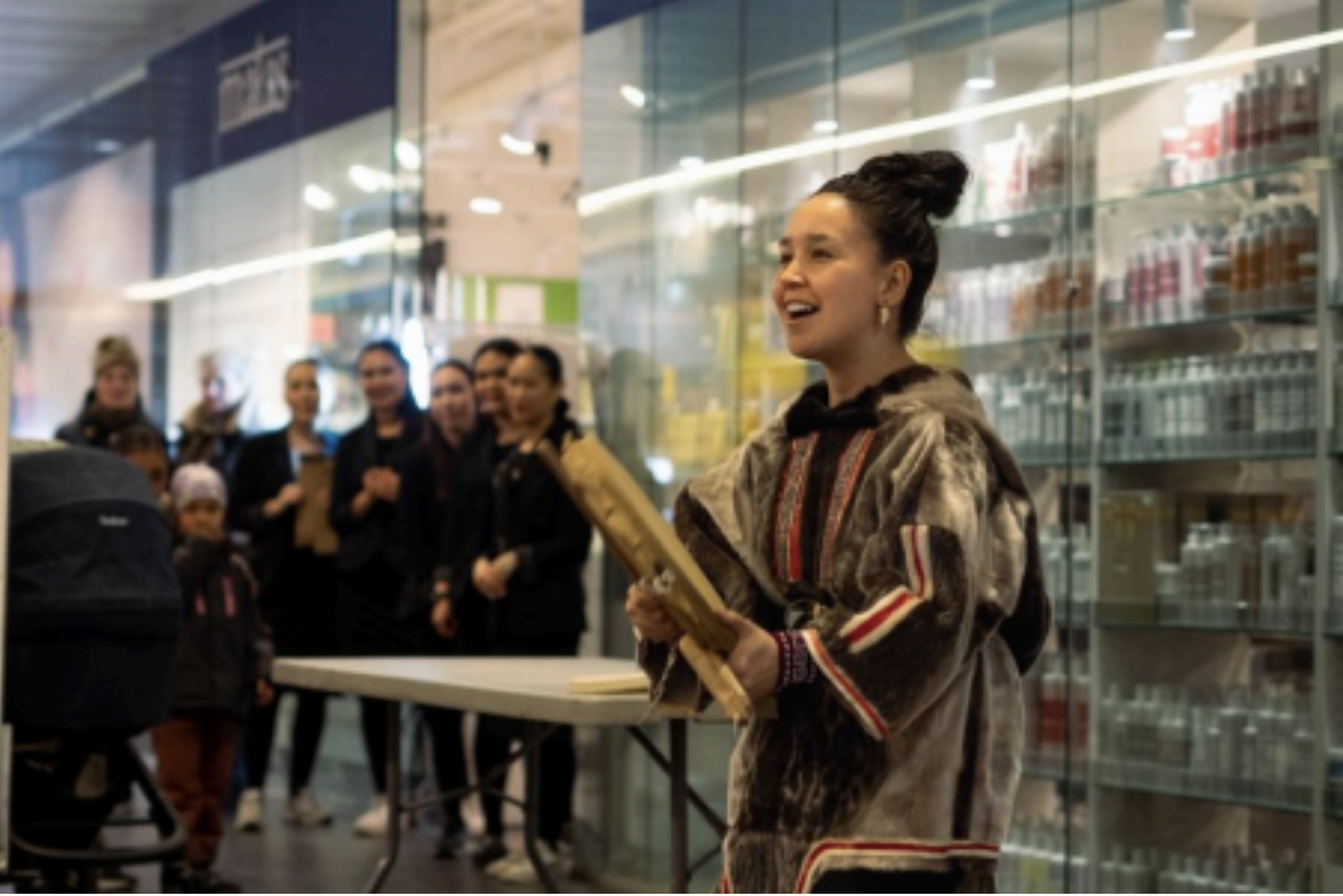
Nuuk Nordisk Kulturfestival / Dida G. Heilmann, Cebastian Rosing, Kevin Telling og Karl Peter Olsen Motzfeldt
Suialaa Arts Festival (Nuuk, Greenland)
Suialaa Arts Festival (formerly named Nuuk Nordic Culture Festival) is a multidisciplinary arts biennial, and one of the biggest returning cultural events in Greenland. It is held in Nuuk and its surroundings within Kommuneqarfik Sermersooq every two years, and hosts artists from various different artforms and from across the Scandinavian and Arctic regions.
The festival started in 2015 inspired by Iceland Airwaves, and since its start one of the core objectives was to showcase Greenland as a window to the Arctic and a meeting point for the different geographies of the most northern parts of the world.
The festival has a programming group that consists of four important partners: Nuuk Art Museum, Katuaq, The National Theater of Greenland and The Central Library of Greenland. These partners are part of the curating and creative process but also serve as main venues during the festival hosting a broad range of concerts, theater, dance, exhibitions, talks, literature and more.
Every second year the festival offers a broad list of program-lineups with new multimodal productions that involve the audience in co-creation and participation which blurs the lines between entertainment and art, performer and spectator, audience and venue.
There are a few aspects that are central to Suialaa:
It forms one of the backbones of the cultural strategy of Nuuk municipality, acting also as a testing ground for collaborations, ideas and projects of the government.
Collaboration across disciplines is central. There has been a large focus on fostering relationships with people and partners that were interested in Greenland, prioritising that capacity to connect rather than having a large name.
Fostering new connections is one of the strategies to find alternative sources of funding. The music industry, for example, has been involved in the festival, and while so far there have not been relationships with labels or agents, for example, new connections with cultural organisations elsewhere have been made (e.g. the Inuit Arts Foundation in Canada).
Audience building and innovative programming are key. One of the goals of the festival is showing art where it is not normally shown, to showcase how the city can be used in different, new ways, and to spark the interest in people to use spaces differently for artistic creation. This also means accessing various niches and social groups, to ultimately tell them that art is for everyone – not just an “elite” or “the hippies”.
A lot of attention is paid to ticketing and communication as ways to amplify reach. The festival usually brings one or two big headliners, that will ensure people want to buy a ticket to see, and then encourages everyone to continue to use the ticket to attend other performances during the rest of the days. All programming is announced via word of mouth, a strong digital and physical communication strategy, and the channels of all partners.
Jonas Lundsgaard Nilsson, Head of the Culture and Event department at Komuneqarfik Sermersooq, former Director at Nuuk Nordic Culture Festival (newly renamed to Suialaa Arts Festival): “A very important aspect of Suialaa is the commissioning of new work. We very consciously separate part of the budget to commission new artworks, of different disciplines, to be produced and showcased during the festival. The partnerships that we have created in this way are also one of the most important outcomes of the festival for us, also from the point of view of return (of artists and people). We have commissioned projects that then take on a life of their own and travel to other regions in Scandinavia and the Arctic. Sometimes we also collaborate with festivals elsewhere in the North, and commission new artworks together, sharing the financial costs. Our ultimate goal is to enable the creation of something that resonates, and foster the ownership of these projects by the artists themselves.”

Key learnings and important points of connection for Darwin:
Proposing multidisciplinary collaborations can strengthen the sector as a whole. It also enables communication and exchange between “unusual suspects” – people operating in similar disciplines but whose worlds often do not collide.
Festivals or events can work as spaces for exchange on a regional scale, and can serve a great function to leverage geographical differences and unbalances.
Finding references or best practices facing similar challenges is a tool to start shaping exchange platforms. Greenland mirrors itself in Iceland, due to the regional similarities and remoteness – searching for international parallelisms could be a good way for Darwin to create new music offers in the city.
Involving all stakeholders of the ecosystem in a festival is a great way to strengthen it as a whole. How could agents, labels, venues, etc. be involved in a celebratory event, of whatever size; how could spaces that are usually not used for art be used.
Activating public space is a fantastic audience building strategy. Exposure to art in public spaces is one of the most successful ways to promote artistic exchange, and dialogue between audiences and creators.
International relations can be fostered despite the distance, and sometimes exchange opportunities take a long time to materialise, yet ongoing conversations are key for that to happen. Furthermore, being able to showcase a list of partnerships (even if they are informal connections) whose support can be quickly gathered can be a great asset in negotiations with potential funders and governments.
All year-long scouting is important, especially to maintain a database of possible acts and organisations to create exchanges with. To do so, having multiple people of different ages and social backgrounds can help amplify and improve the programming.
Advocating for funding for music export can be more successful when it is done using success case-studies and role models, even if they are international.
CASE STUDY 3
Innovative local government support and advocacy for music
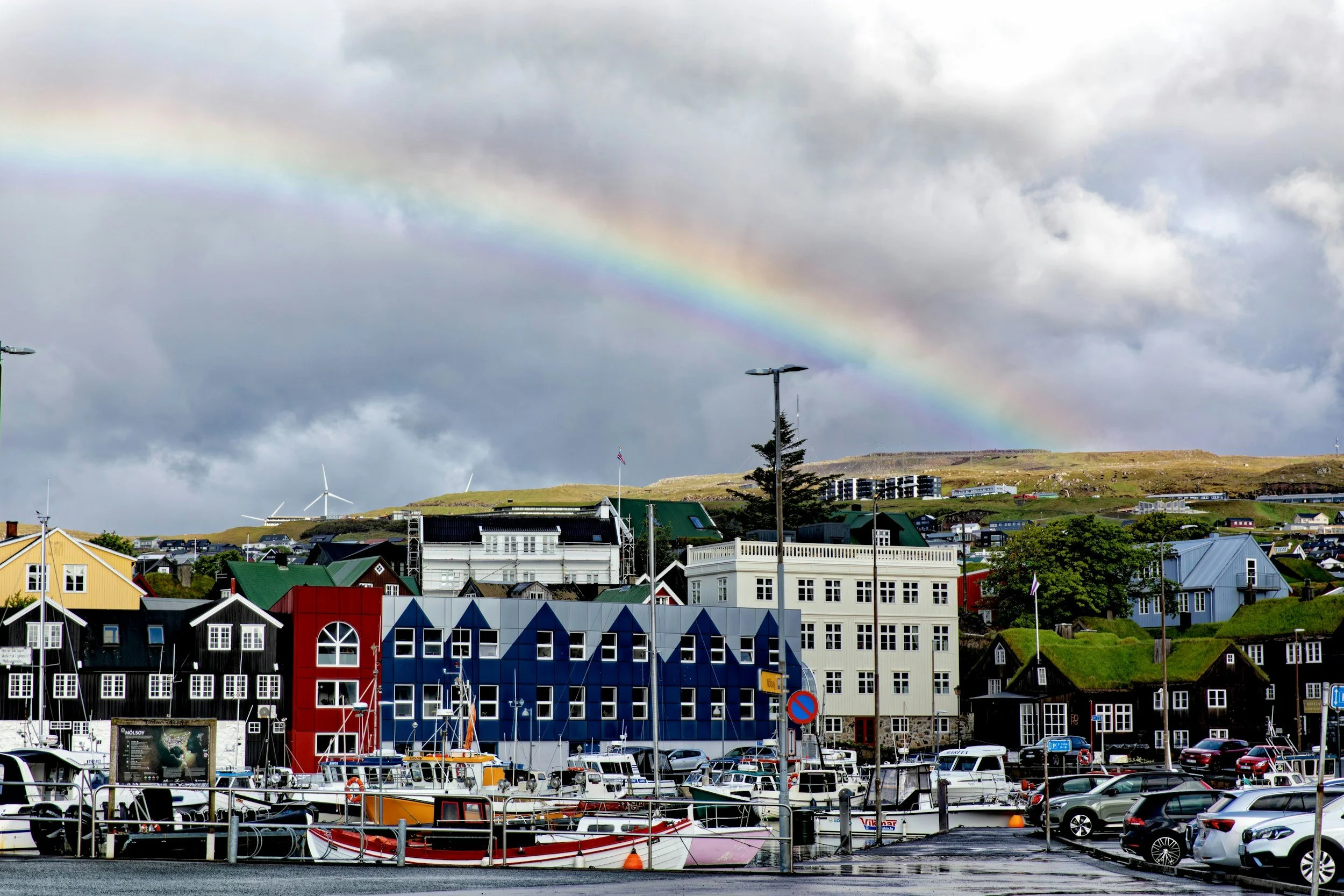
Old harbour of Tórshavn
Tórshavn Kommune (Faroe Islands)
Tórshavn is the capital and the largest city of the North Atlantic archipelago of the Faroe Islands (Føroyar, one of the three constituent countries forming the Kingdom of Denmark), located in the municipality with the same name (Tórshavnar Kommuna). The city sits on the eastern coast of southern Streymoy, the largest island of the archipelago –approximately 373 km2– and has traditionally been a harbor city (hence its name, havn). Tórshavn Kommuna has a population of 22,500 (the Faroe Islands has a total of 55,000 inhabitants) and is the seat of the municipal government and the Faroese self-rule government (Føroya Landsstýri) which holds executive power in local government affairs.
The Culture Department of the municipality of Tórshavn has been working over the last couple of years on a new cultural policy. The strategy, which is now finalised, is awaiting ratification from the new Council, elected in January of 2025. While some core features of the new policy are shared by the new coalition, it is likely that the Council may want to amend certain features.
Generally, the different forms of support of Tórshavn Kommune for the arts community can be summarised as follows:
Core funding grants: local direct funding in the form of small grants for local organisations to cover their general running costs. This is given to both professional and community-run organisations.
Project grants: local direct funding for project grants, which can be large, which can be applied for once a year, or smaller ones, that come out on a rolling basis.
Support funding for national initiatives,
○ The travel funding for export, which covers the travel costs of touring internationally, and is a collaboration with the local airline, the state, and a third party.
○ The regional music initiative, inspired in the danish scheme Regionale Spillesteder, which is essentially a collaboration among different municipalities that promoters all over the archipelago can apply for to get financial support to cover a minimum of the costs to put up a show (basically to be able to cover the minimum wages for musicians and not depend on doorsale or drinks for that).
○ Collaboration in the Arts in schools programme, which covers the costs of having artists of different fields perform and give workshops in regular schools.
Ownership and management of the municipality-run venues. In these, the municipality provides access to the venues (sometimes for a small cut of the door sales, but often for free) while the venue (i.e. the city) covers the cost of staff and other running costs too.
Operationalisation of the newly-built music school, which provides affordable music tuition.
Other forms of support, for example through the provision of affordable work spaces for artists as well as arts organisations and societies; or securing a percentage of every budget for new or refurbished buildings to be dedicated to commissioning art for the building.
Sunnuva Bæk, Senior advisor for culture at Tórshavn City Council: “Even if the new policy is based on the needs of the arts community, it is still not comprehensive enough. While the municipality actively chose to employ a person formerly involved in the arts sector, hence with deep knowledge on the field, there is still a need for a complete mapping of the cultural sector in Tórshavn. We have no data on the value of the arts, only on things like the impact of music in education, and that’s very academic. There is no mapping of the needs of the sector and the impact of culture in society; and the arts community, in general, is not persevering enough at communicating their needs directly to the relevant bodies. They would benefit enormously from better organisation and advocacy in order to make these needs more precise and easier to accommodate.”

Key learnings and important points of connection for Darwin:
Diverse streams of public funding contribute to create a more robust ecosystem. This can be achieved both from a point of view of different cultural budgets but also harvesting funding for culture from other budget lines (for example, tourism, heritage, etc.). Securing funding from different administrations on different levels can also act as an incentive for others to chip in.
In small or remote municipalities, strong communication with local organisers at all levels is important. While political roles change often, technical roles inside municipalities often stay longer. Fostering relationships with those, and creating spaces for exchange and mutual learning can be a great way to transmit the challenges and needs of the sector.
Increasing the visibility of volunteers in the scene is crucial. Even if frontrunners and champions of the music and creative scene often will continue to be so and nourish the scene despite the lack of government support, it is absolutely necessary that their existence is known by city officials, so it becomes easier to make the case of their value for the city.
Encourage regional collaboration amongst municipalities. If that is not happening organically or spearheaded by governments themselves, civil society organisations and other stakeholders of the ecosystem can start collaborating across regional “borders”, and bring the case for that collaboration to the administrative level.
Repurposing buildings is flashy and looks good but it’s not easy. Governments often like headline-like announcements such as these, but it is important that they understand the costs of it, and most importantly, the needs of the creative community for such a repurposing to take place.
Lobbying is time and energy-consuming and demands specific skills. If the capacity exists for music offices or cultural organisations to consider opening a (part time) job position for lobbying and advocacy, the impact can be huge and can liberate artistic roles from unnecessary administrative burdens that shrink their creative capacity. Alternatively, asking public authorities for funding specifically to cover the costs of that position can be the first step towards aligning all advocacy efforts.
Data is crucial. Mapping the assets, stakeholders, people and needs of the ecosystem is an unavoidable first step in order to successfully outline the value of the music sector to the city.
PART 5
Conclusion and Final Recommendations
Key learnings for the local partner and most pressing next steps
The process was revelatory in both outlining the known issues as well as providing some focus on lesser known areas of concern amongst the sector including the changing nature of volunteers and the repurposing of existing infrastructure. We often find ourselves feeling like it is insurmountable to create initiatives and generate progress in activating the creative sector at a government level but this process broke down the steps that make it achievable.
The key next steps for Darwin and the Northern Territory is to use this opportunity to strongly advocate with purpose to ensure the valuable work contributed by all those engaged with this lab has the best chance to benefit the future of the Northern Territory creative sector.
Mark Smith,
Musician, Executive Director at MusicNT, Australia’s Northern Territory music office
Overview of key recommendations for next steps
Short term (0-12 months)
1. Map the music ecosystem of Darwin
a. Conduct a comprehensive, data-driven mapping project that identifies music venues, artists, organisations, audiences, volunteers.
b. Cross-check that data with other relevant datasets, such as economic development, urban planning, and social and demographic information.
c. Use the resulting foundational data to unpack preliminary needs, gaps and challenges of the ecosystem.
d. With the information above, plan a qualitative research in combination. Think of workshops, focus groups or in-depth interviews.
2. Strengthen relationships with Local Council Staff
a. Establish regular communication with key technical officers in the City of Darwin and surrounding municipalities—especially those with long tenure.
b. Share case studies, invite them to events, and involve them in sector consultation processes.
3. Celebrate and acknowledge volunteers that are part of the music scene in Darwin
a. Launch a recognition initiative (e.g. Music Champions of Darwin) to highlight the contributions of volunteers and grassroots leaders in the city’s music scene.
b. Document these contributions and produce content (social media and PR materials, brochures or strategy documents) to support funding bids and policy advocacy.
Medium term (1-3 years)
4. Develop a diversified public funding strategy
a. Initiate conversations with key representatives of 3-5 key sectors related to music such as tourism, health, education and community development.
b. Request or understand key priorities for these sectors. Revise the music sector’s priorities, and align them with those.
c. Carry out a comprehensive pitching strategy to argue how music outcomes can align and contribute to the broader strategic goals of these sectors.
d. Create moments for public showcase of these strategic alignments across sectors, primarily for other key actors to witness and become interested.
5. Pilot regional music collaborations
a. Launch a music exchange program with other NT councils (e.g. Palmerston, Katherine, Alice Springs).
b. Use pilot projects (such as Music Trails) to demonstrate the benefits of cross-regional collaboration and lay the groundwork for formal partnerships.
6. Host an Annual Music Ecosystem Forum
Convene a yearly event that brings together artists, government representatives, funders, and community stakeholders to discuss sector challenges, opportunities, and innovations.
7. Advocate for a music advocacy role
a. Research examples of music or cultural advocacy officers in councils or associated ngo’s in Australia and schedule an interview to understand key learnings, do’s and dont’s.
b. Propose the creation of a part-time Music Advocacy Officer within MusicNT or Darwin’s Local Council to lead policy engagement and sector representation.
c. Lead the discussions to allocate funding for this role to be paid, seeking dedicated financial support from Council or proposing a way to process contributions from diverse arts institutions.
Long term (3-5+ years)
8. Develop a creative infrastructure policy
a. Process all results from the Mapping exercise (Recommendation 1, Short Term, above) and package them into a policy guide for Council, as well as other advocacy materials, PR materials and investment guidelines.
b. Advocate for a municipal policy that aligns the repurposing of public space with the needs of the creative sector.
c. Ensure follow-up consultation sessions between Council and arts organisations and actors.
d. Avoid tokenistic or symbolic initiatives.
e. Develop, propose and ensure monitoring mechanisms to ensure compliance and ongoing revision of the successes or failures of the implementation of this policy.
9. Establish a cross-government Music Policy Taskforce
Partner with the NT Government to form a taskforce or interdepartmental group to coordinate music-related investment across tourism, health, and education.