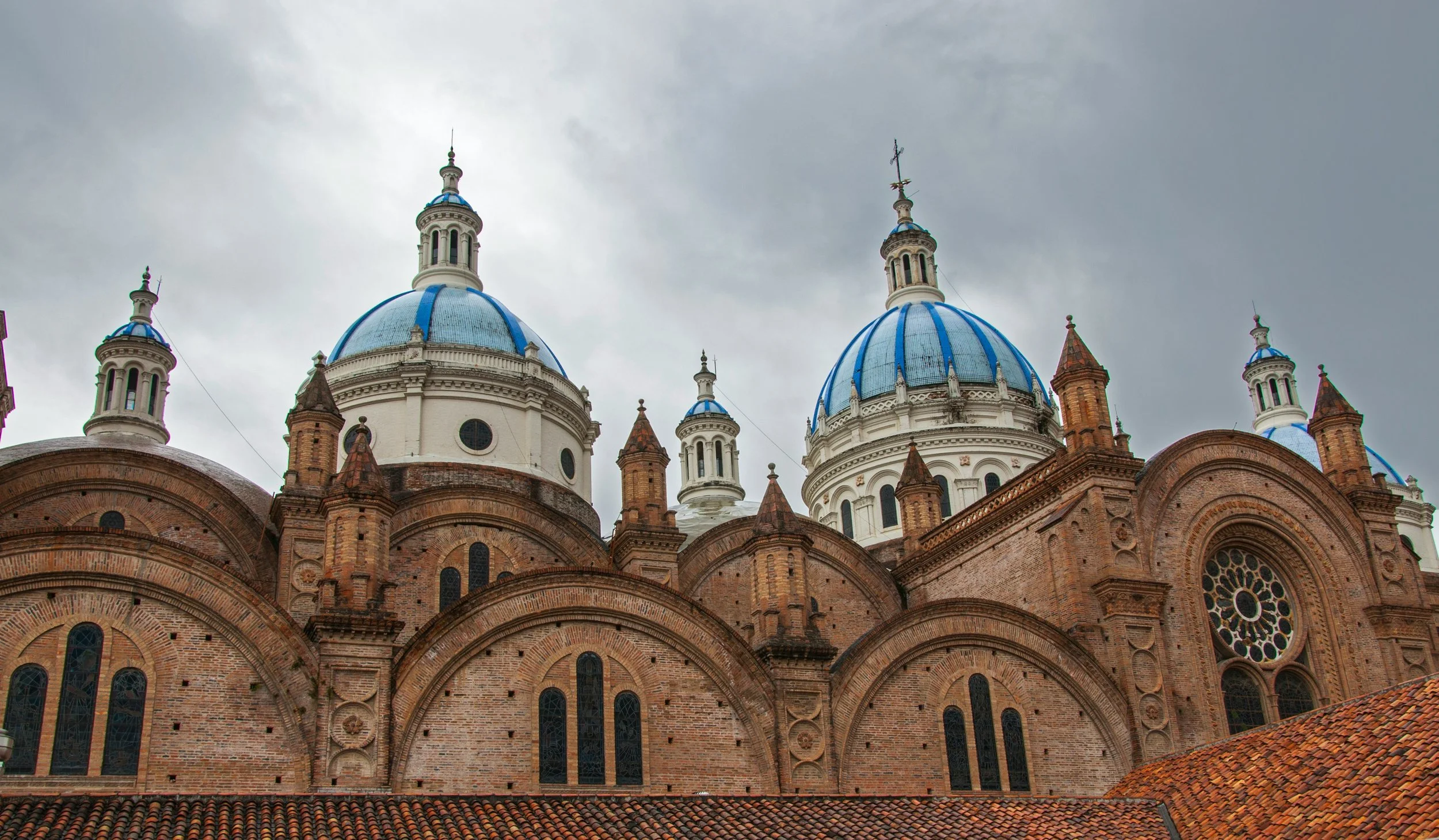
Cuenca, Ecuador
Empowering global communities via the advancement of music policy
1. Introduction
The Center for Music Ecosystems is privileged to lead The Music Policy Resilience Network into its third year, as the program continues to develop and demonstrate its relevance to participating towns, cities, and communities, as well as providing broader benefits to those able to gain from the findings and recommendations presented in this report and the accompanying reports for all participating cities.
The Music Policy Resilience Network emphasizes the role and impact of music ecosystem policy, focusing on how it can be effectively utilized in small, mid-sized, and geographically isolated communities, as well as among those who consider themselves geographical ‘outliers,’ increasing their resilience and resistance to internal and external shocks and disturbances, and enabling them to develop not just in the field of music policy, but across various related policy areas, as befitting need. The work examines how resilience is currently embedded in the music ecosystems of the participating towns and cities, identifies areas requiring further development, demonstrates international best practice case studies, and concludes with a series of actionable recommendations, tailored to each location.
The Music Policy Resilience Network merges both research and practice via the following activities:
Monthly 1.5 hour online masterclasses and workshops focussing on topics requested by members, including ‘Empowering the Artist in the Community’; ‘Music and Tourism’; ‘An Introduction to Music Policy’; ‘The Power of Networks’; and more
1:1 research with cities and stakeholders with an assigned expert consultant, achieved through a combination of literature review, data analysis, stakeholder analysis (interviews, focus groups, written exchanges, surveys, mapping exercises, and more) culminating in a written and freely available report with recommendations
Access to the Music Policy Resilience Network online platform, and direct links with all network members
Opportunities for peer review of ongoing music policy and related projects by other members of the network
Measuring research impact and prospective next steps in each of the communities
Lifetime membership of the network (including access to the online platform and monthly masterclasses).
Join the Network
The Music Policy Resilience Network has evolved into a rolling programme, with towns, cities and communities able to join at any point throughout the year. Contact us to express your interest: info@centerformusicecosystems.com
2. Context
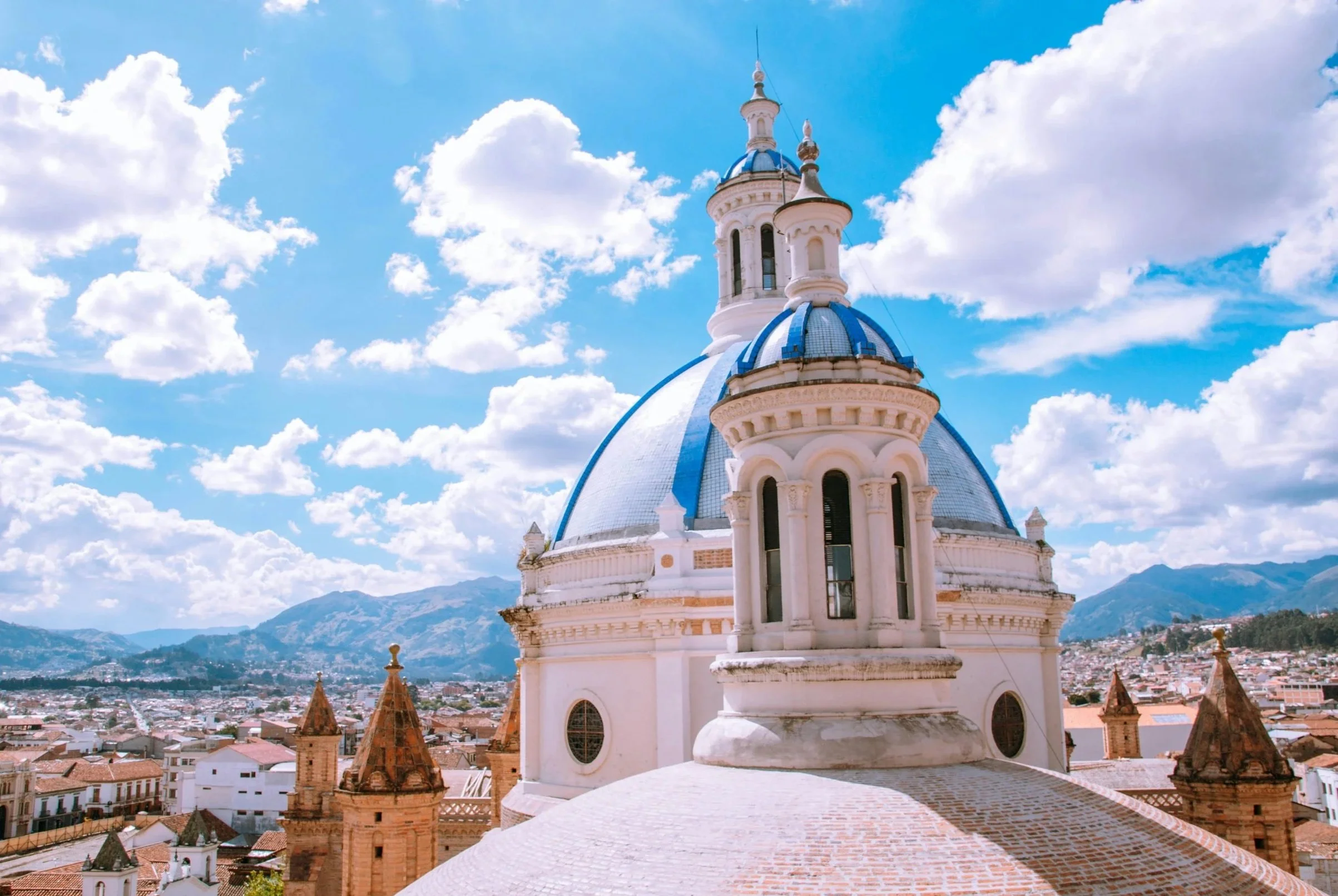
Cuenca, officially Santa Ana de los Ríos de Cuenca, is a city in the central inter-Andean region of Ecuador, located by the Paute river basin, at an altitude of 2,538 meters above sea level. It is the capital of the Azuay province and has a population of almost 600,000 inhabitants (2022 census). It is the third biggest city of Ecuador, after Guayaquil and Quito, and despite its large size, it does often behave and perceive itself as somewhat peripheral, given its relationship with the two largest cities in the country, and its location in the mountains.
Cuenca’s historic centre was inscribed on UNESCO’s World Heritage List in 1999 marking how it has succeeded in balancing its historical Renaissance colonial town-planning ideals with Indigenous roots.
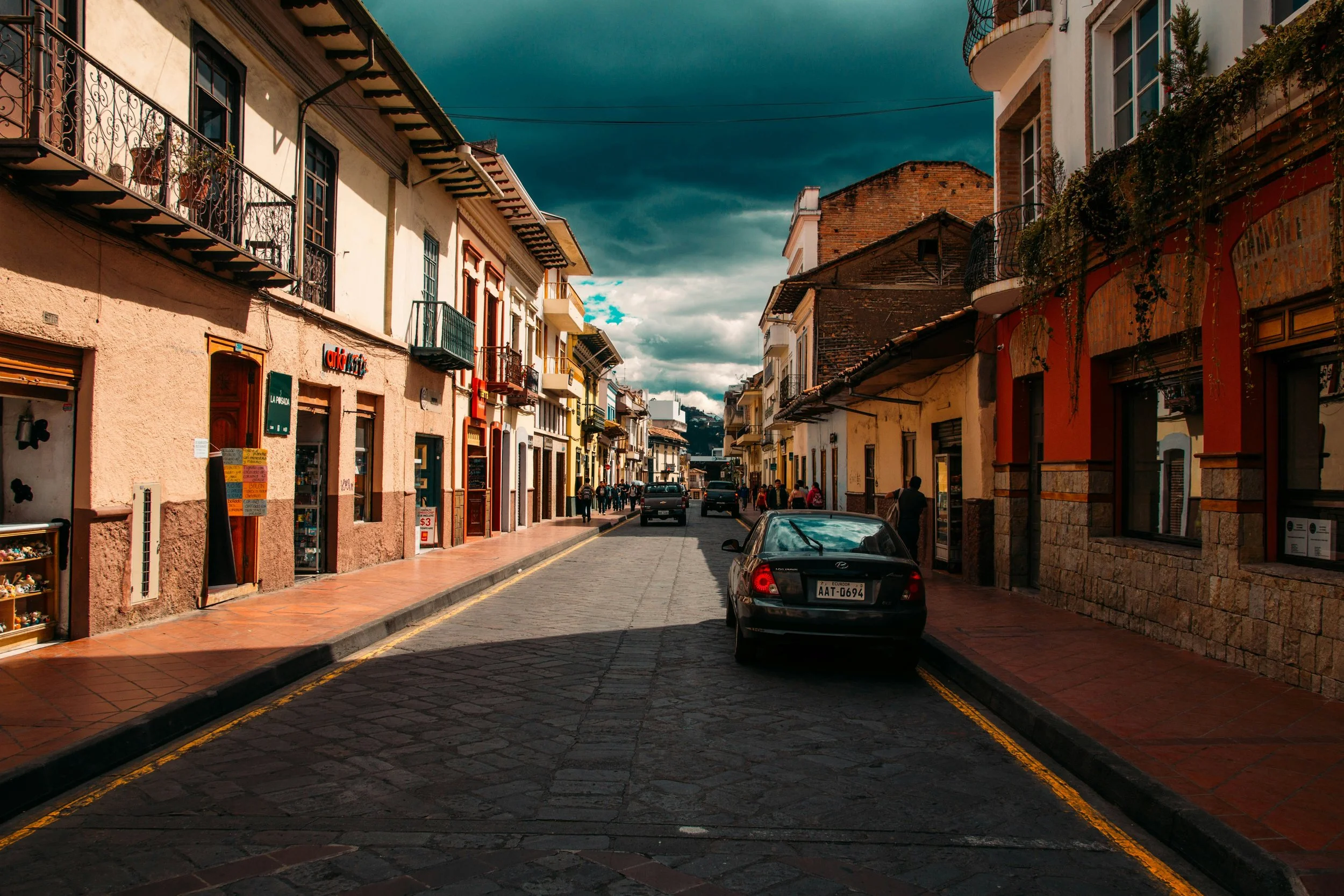
Often called Ecuador’s “cultural capital” and “Athens of the Andes,” Cuenca is considered to be a vibrant, young city, with streets filled with restaurants, bars, and small venues. The city hosts four universities, hence it also is home to a large young population.
Cuencais well-known for its Carnaval, a local holiday celebrated three days prior to Ash Wednesday, and the city’s local festivities at the beginning of November, on the occasion of Cuenca’s Independence Day, spanning a number of days and consisting of numerous parades, concerts and fairs.
While Cuenca has a series of larger cultural venues – the Casa de la Cultura, for example, (and its recently renovated theatre) anchors a network of municipal galleries– and organises large-scale events such as the International Cuenca Biennial, the ecosystem does struggle with a lack of space and support for grassroots cultural offer.
Cuenca’s music ecosystem stands apart from that of Quito and Guayaquil in remarkable ways. Despite being far smaller in population, the city has consistently punched above its weight, producing some of Ecuador’s most influential acts — from pioneering rock outfits like Basca and Sobrepeso to pop voices such as Alex Ponce, and contemporary indie names like La Madre Tirana, Neoma, and Letelefono. Unlike the rock movements in Quito and Guayaquil, which endured heavy repression during the 1980s and 1990s, Cuenca’s scene evolved without that historical weight, allowing it to develop an identity that feels more intimate, self-contained, and distinctly its own.
Cuenca’s reputation as a friendlier, safer, and more livable city also shapes its cultural life. These qualities influence not only how musicians create but also how audiences participate, fostering a scene that feels communal rather than competitive. Yet this very tranquility comes with a trade-off: Cuenca is even more disconnected from international touring circuits than the rest of Ecuador, a limitation that poses challenges for visibility but also fuels a certain independence and DIY spirit in its creative development.
3. Deliverables
PHASE 1
Stakeholder engagement
Five in-depth interviews with five key stakeholders and one focus group with youth, development of a clear outline of key cross-sector priorities.
PHASE 2
Three best practice international case studies
Three best practice international case studies on the topics of: spaces for experimentation and culture that use music and the arts as tools for social cohesion and justice, particularly in relation to contexts of political instability and violence (1 and 2) and synergies between cultural policies and climate change.
4. Methodology
This work is the result of combining desk research, qualitative interviews, and a focus group, with active involvement of the city contact throughout the process to maximize the impact and value of the work while it was being produced. The result aims to be a synthesis of this collaborative process, containing the key findings and possible directions for action.
As part of the fieldwork, six in-depth interviews were conducted with members of Cuenca’s music scene, covering a broad range of ages and occupations, including cultural managers, musicians, artists, communicators, and an academic. These conversations offered diverse perspectives on the challenges and opportunities within the local ecosystem. In addition, a focus group was organized with 17 members of the HIFI Music Club, a community of music fans who meet monthly to discuss music, engage with artists, and connect with other actors in Cuenca’s and Ecuador’s cultural scene. This focus group was particularly valuable for understanding the audience’s perspective on how Cuenca’s music ecosystem is experienced and for identifying gaps between audience expectations and the realities faced by local creators.
This report was produced in close collaboration with Juan Pablo Viteri, whose extensive knowledge of the Ecuadorian music landscape and the availability and willingness to carry out interviews and a focus group in person in Cuenca incredibly enriched the content of this work.

PHASE 1
Stakeholder Engagement
Context and Introduction
The first phase of MPRN research in Cuenca was a preliminary listening exercise to determine shared challenges, gaps and desired futures between key actors in Cuenca’s music ecosystem, which took place through a series of in-depth interviews and one focus group through the start and spring of 2025 and resulted in the following key challenges and possible futures.
Key Challenges
1. Lack of space for performance and programming
Presenting live music in Cuenca faces structural challenges that affect both musicians and audiences. Fans frequently point to a shortage of venues with adequate conditions — in terms of sound, equipment, and comfort — and note that the overall offer of live events is limited, both in number and in diversity.
While the city does have larger institutional spaces, such as the Casa de la Cultura or the municipal theatre, smaller and more adaptable venues are scarce, making it harder for emerging artists to build a following. “Permits are the biggest difficulty in Ecuador,” explains Pancho Piedra, radio and music DJ, event organizer and artist, “because they are not at all easy to obtain and they entail very complex bureaucracy that generates long waits, payments and other obstacles.”
The difficulty of securing permits and complying with strict regulations has pushed many promoters and musicians toward informal or clandestine solutions, often organizing shows in peripheral areas or private locations. As cultural manager and scholar Sofía Cardozo notes, “It almost feels as if the city seems to prefer more crowded events in small, intimate, niche venues.”
This dynamic reveals that music is seldom integrated into Cuenca’s everyday urban life. While this can be seen as a limitation, it also points to an area of opportunity: positioning music as a year-round cultural presence could contribute to the city’s tourism, strengthen its creative economy, and enhance residents’ quality of life. Realizing this potential would require both improvements in infrastructure and a broader cultural policy framework that recognizes live music as a significant component of Cuenca’s identity.
These challenges are accentuated during the city’s major festivities in early November, when cultural activity is temporarily concentrated. The celebrations for Independence Day generate an intense cultural boom, with parades, concerts, and fairs saturating venues and public spaces.
“It would be great if there were more events in public spaces beyond Cuenca’s city festivities,” remarks Constanza Figueroa, cultural manager and communications professional. She adds that this “stationalisation” of cultural activity generates an uneven rhythm for both performers and audiences: periods of abundance during festival seasons are followed by long stretches with few live music options, shaping how the city experiences and attributes value to its musical life throughout the year.
KEY QUOTES
Pancho Piedra, Radio and music DJ, event organizer and artist: “Permits are the biggest difficulty in Ecuador, because they are not at all easy to obtain and they entail very complex bureaucracy that generates long waits, payments and other obstacles.”
Sofía Cardozo, Cultural manager and scholar: “It feels as if the city prefers more crowded events in small, intimate, niche venues.”
Constanza Figueroa,Cultural manager and communications professional: “It would be great if there were more events in public spaces, outside of Cuenca's city festivities.”
2. Financial constraints and renovation of the funding models
Organising music events in Cuenca presents significant challenges for those seeking to profit or even break even. Within the independent circuit, bars and small venues that host live performances often provide only the physical space, without clear agreements on revenue sharing or guarantees for the musicians.
In many cases, venue owners do not see direct benefits from live music — such as increased sales or new audiences — and therefore limit their support to simply “opening the doors,” offering no sustainable remuneration model for artists. This dynamic renders the value chain precarious: bands perform mainly for exposure rather than income, and organizers shoulder the financial risk without a predictable return.
At an institutional level, municipal grants and competitions designed to support culture create additional complications. Winners of these funds are typically required to stage free events, even when the grants themselves are insufficient to cover production costs.
As cultural manager and scholar Sofía Cardozo explains, “when you win a municipal grant, you’re also not allowed to charge for the concert. They give you a small amount of money — say, $5,000 — but then they expect you to organize a huge festival and not charge anything.” While this model aims to expand access to culture, it has fostered what many describe as a “culture of gratuity,” where audiences expect free events as the norm.
For fans, this has undeniable benefits: free concerts have introduced them to local bands they might never encounter through mainstream media. Yet for organizers and musicians, the model undermines the economic viability of the music scene.
This situation is further complicated by the policies of the Sociedad de Autores y Compositores del Ecuador (SAYCE). By law, event organizers must pay a percentage for the live music performed — a mechanism meant to protect authors’ rights but widely criticized for its lack of clarity and fairness.
As event organizer and DJ Pancho Piedra notes, “what bothers me most is SAYCE, because in electronic events it’s all for the love of it. At least in the events I do, I’m not getting rich. But SAYCE always takes a cut of the total ticket sales, without considering expenses. In the end, we lose money and still have to pay this fee to SAYCE, and none of the international DJs I’ve brought ever end up seeing any of that revenue.” These criticisms echo findings in Enfoque (USFQ, 2020), which reported persistent concerns from musicians about SAYCE’s high administrative costs, limited transparency, and practices perceived as favoring an “inner circle” of established artists.
Taken together, these factors — unclear venue agreements, grant conditions tied to free events, the entrenched expectation of gratuity, and the burdens imposed by copyright management — create an ecosystem where profiting from live music is exceedingly difficult. The challenge moving forward lies in balancing accessibility for audiences with sustainable models that recognize live music as both a cultural and economic asset for Cuenca.
As a summary, the key challenges within this theme are:
Bars and small venues often provide space for live music without revenue-sharing arrangements, leaving musicians unpaid and organizers to absorb financial risk.
Public funding requires events to be free, which benefits audiences but fosters expectations that cultural events should not be paid, undermining the economic sustainability of the scene.
Mandatory fees charged by SAYCE for live performances are criticized for their lack of transparency and disregard for event expenses, further straining already tight budgets.
KEY QUOTE
Sofía Cardozo, Cultural manager and scholar: “In the cultural field in general, artists need to have a clearer understanding of roles and of the value chain. They want to carry out the communication and PR, be the producers, etc. – basically do everything themselves.”
Juan Pablo Hurtado, artist: “You know, we have great musicians, and now maybe great music producers too, we have amazing studios — but there isn’t someone you can go to and say, ‘Look, this is what I’ve got, produce me, give me the chance to get out there,’ and have that person say, ‘Great, let’s make an album, let’s make a song, let’s do it.’ That figure doesn’t exist.”
Leo Hurtado, artist, filmmaker, producer: “I still have to take on other jobs to support myself. I keep having to teach classes or make institutional videos just to make life work.”
3. Need for innovation and diversification in programming
The need for innovation and diversification in Cuenca’s music programming is evident when looking at the city’s preference for foreign music over local production. Tribute band shows often receive significant support, while original projects from local artists struggle for visibility and funding.
Music producer and scholar Renato Zamora critiques this imbalance: “I think that spending public resources on a tribute show to whatever foreign band is terrible. Not because it is not good per se, but because it is not contributing more than by creating a space for entertainment only – it leaves nothing in and for the city. Especially while you could be using that money to give visibility to a lot of artists who need a space to spread their own creativity, because in the long run the creativity of these artists is the result of the place where they live.”
This pattern is connected to a deeper issue of cultural self-esteem in Ecuador. Ketty Wong (2012), in her seminal work Whose National Music? Identity, Mestizaje, and Migration in Ecuador, argues that Ecuadorians have historically struggled to embrace local popular genres as part of their national identity, often favoring foreign or elite musical forms. This ambivalence toward “lo propio” (in English, “one’s own”) contributes to undervaluing local creativity and reinforces programming decisions that privilege the familiar and foreign.
A broader cultural conservatism also shapes programming decisions. This conservatism favors safe and familiar options over experimentation, which is why cover bands have become so popular. These acts provide audiences with recognizable songs, reinforcing a cycle of comfort with the known rather than fostering curiosity for new sounds. Radio DJ and event producer Pancho Piedra notes how this conservatism affects new genres: “Cuenca needs to open its mind a little more. It is difficult for people to listen to totally new sounds, for example in the electronic music scene.” This reluctance to engage with the unfamiliar limits the diversity of musical offerings and discourages risk-taking by artists and organizers.
Fans themselves identify conservatism, classism, and growing gentrification as barriers to cultural diversity in Cuenca. Research on gentrification demonstrates how these processes often sanitize and homogenize cultural spaces, replacing grassroots and DIY initiatives with more commercial offerings1 (Zukin, 2010; Vivant & Charmes, 2008). In Cuenca, this dynamic compounds existing conservative tendencies and reduces opportunities for emerging artists and subcultures to gain visibility.
The association of youth-oriented genres — such as rock, electronic, or urban music — with danger or moral decline further narrows what is considered acceptable. Events showcasing these genres are often perceived as risky or disruptive, reinforcing barriers to innovation and diversification. Cultural manager Constanza Figueroa explains: “In Cuenca, it is very ingrained to behave well, to be polite. That's why every time something out of the ordinary has happened it has often either been canceled or there has been some problem or clash in, for instance, social networks. And these conflicts often translate to homes, families. The family and the political context also crush these things.”
Even within alternative music spaces, there is limited openness to broader forms of diversity, particularly regarding gender and sexual identities. These spaces seem to reproduce exclusionary practices even as they position themselves against mainstream cultural conservatism.
Addressing these issues requires more than just varied programming. It demands a cultural shift that embraces difference, reclaims local creativity, and rebuilds cultural confidence. Supporting original artists and creating inclusive platforms could help Cuenca move toward a more dynamic and representative music ecosystem — one that balances its rich traditions with the evolving identities of its younger generations.
KEY QUOTES
Renato Zamora, music producer and scholar: “I think that spending public resources on a tribute show to whatever foreign band is terrible. Not because it is not good per se, but because it is not contributing more than by creating a space for entertainment only – it leaves nothing in and for the city.”
Pancho Piedra, radio and music DJ, event producer and artist: “Cuenca needs to open its mind a little more. It is difficult for people to listen to totally new sounds, for example in the electronic music scene.”
Constanza Figueroa, Cultural Manager: “In Cuenca it is very ingrained to behave well, to be polite. That's why every time something out of the ordinary has happened it has often either been canceled or there has been some problem or clash in.”
-
Zukin, S. (2010). Naked City: The death and life of authentic urban places. Oxford University Press.; Vivant, E., & Charmes, E. (2008). The sociology of gentrification. Urban Studies Journal, 45(12), 2643–2661.-
4. Options for professionalisation
Cuenca’s music scene operates in a challenging environment where culture and creative practices are often undervalued, both socially and institutionally. This mirrors broader trends in Latin America, where creative industries contribute notably to GDP yet remain underfunded and precarious (UNESCO, 2022; Azuara Herrera et al., 2022)2. In Ecuador, this results in fragile support systems for musicians, who depend on short‑term grants, informal venue agreements, and personal networks rather than robust cultural policies.
A pressing issue is the scarcity of Ecuadorian record labels and professional management infrastructure. Many artists lack representation that connects them to sustainable markets, both locally and internationally. As artist Juan Pablo Hurtado explains, “We have great musicians and now perhaps great producers, we even have incredible studios — but there’s no one you can go to and say, ‘Here’s my work, produce it, help me get it out there.’ There’s no label here.”
This is compounded by the need for clearer professional roles and skill development. Cultural manager Sofía Cardozo observes that many artists try to handle every aspect of their careers — from production to communication — without proper training in management or negotiation. “There’s a need,” she notes, “for musicians to develop more negotiation skills, even commercial or managerial abilities, and for education to focus on what a professional career path in music actually looks like.”
While Cuenca has universities and conservatories, these rarely prepare musicians for practical industry demands like digital distribution or rights management (CIPE, 2023). This precariousness is echoed by artist and producer Leo Hurtado, who describes constantly juggling other jobs to sustain his music: “I still have to take on other work to support myself. I keep teaching or making institutional videos just to make life work. If one album cycle doesn’t work, I move on to the next — you’re always shifting strategies just to keep going.”
Professionalisation also requires more opportunities to perform and gain experience. Cuenca’s limited live circuits restrict artists’ ability to develop stagecraft, build audiences, and refine their identity. Addressing these gaps demands multi-level interventions: strengthening local labels, expanding training programs, fostering regular performance opportunities, and integrating culture into broader economic and urban strategies so music is recognized as vital to Cuenca’s future development.
KEY QUOTE
Sofía Cardozo, Cultural manager and scholar: “In the cultural field in general, artists need to have a clearer understanding of roles and of the value chain. They want to carry out the communication and PR, be the producers, etc. – basically do everything themselves.”
Juan Pablo Hurtado, artist: “You know, we have great musicians, and now maybe great music producers too, we have amazing studios — but there isn’t someone you can go to and say, ‘Look, this is what I’ve got, produce me, give me the chance to get out there,’ and have that person say, ‘Great, let’s make an album, let’s make a song, let’s do it.’ That figure doesn’t exist.”
Leo Hurtado, artist, filmmaker, producer: “I still have to take on other jobs to support myself. I keep having to teach classes or make institutional videos just to make life work.”
-
UNESCO. (2022). Re|Shaping policies for creativity: Addressing culture as a global public good (3rd ed.). UNESCO; Azuara Herrera, O., Grant, K., Grazzi, M., Herrera, D., Luzardo, A., Navarrete, J., Peinado-Vara, E.,
Prada, E., Puig Gabarró, P., Rodríguez, S., Saravia, E., Rucci, G., & Zaldívar, T. (2022). First Regional Policy Dialogue on Cultural and Creative Industries with an Intersectoral Approach: The role of the cultural and creative industries in the economic reactivation of Latin America and the Caribbean. https://doi.org/10.18235/0004013
5. Lack of innovation in public policy
One of the most persistent challenges in Cuenca’s music ecosystem is the absence of long-term cultural policies. Public support tends to focus on isolated festivals or commemorative events rather than sustained frameworks to nurture cultural life. Each new municipal administration resets priorities, leaving musicians and cultural managers navigating uncertainty and short-term planning.
A forward-looking policy should also incentivize private sector participation rather than rely almost entirely on municipal budgets. Other Latin American cities offer useful models: Bogotá’s Festivales al Parque blends public funding with sponsorships (Cities of Music Network, 20233), while Medellín’s creative districts attract private investment through tax incentives (Buitrago & Duque, 2013)4. Similar approaches could help Cuenca share financial responsibility and reduce chronic underfunding of its music scene.
Equally important is reframing music as both cultural heritage and economic driver. The Inter-American Development Bank report that creative industries contribute 2–3% of Latin America’s GDP and generate thousands of jobs (Luzardo et al., 2023)5. Cultural manager Sofía Cardozo stresses the need for musicians to “develop more negotiation skills, even commercial or managerial abilities,” suggesting that public policy should link music to tourism and urban branding.
Policies must also focus on building audiences, not only financing events. Global streaming platforms overshadow local creators, while countries like Argentina and Chile have introduced radio quotas and curated playlists to promote national music (Global Voices, 2009; Music Economy, 2023)6. Combining similar measures with school and community programs could foster long-term pride in Ecuadorian creativity.
As mentioned, another challenge is bureaucracy and fragmented governance. Multiple offices oversee cultural matters, creating complex and costly permit processes. Artist Juan Pablo Hurtado notes: “We need all this to be easier, more accessible, to lower costs so there’s actually some return for us… If I organize concerts with all my heart but end up with nothing and lose money, it just doesn’t work.” Filmmaker and songwriter Leo Hurtado adds: “It took me two months to get all the permits I needed. I had to invest a huge amount in permits, fines, stage — everything. The historic center is untouchable, almost like a dinosaur. But people live there; people want to live there.” Their experiences reveal how rigid heritage protections often discourage rather than enable cultural activity. Simplifying processes through a “one-stop-shop” for cultural permits could encourage more grassroots initiatives.
Finally, as Pancho Piedra observes, policies should “focus more on the seed,” investing in workshops and early training like Medellín’s world-class beatmaker programs. He frames culture as “something that heals societies,” lamenting that in Cuenca, cultural spending is often tied to immediate political returns rather than long-term vision. Medellín’s Comuna transformation — from violence to cultural hub — illustrates how integrated policy and community-led art can reshape entire urban narratives (UNESCO, 2019; Bonovov, 2023)7.
KEY QUOTES
Juan Pablo Hurtado, artist: “We need all of this to be easier, more accessible, so we can reduce costs and actually have some return — for us as producers, or whatever we call ourselves, entrepreneurs, cultural managers.”
Pancho Piedra, radio and music DJ, event producer and artist: “[…]they don’t see the bigger, long-term vision. What would happen if we brought more culture into schools from childhood, teaching that culture and music are among the greatest things we have as humanity — the things that endure, that make us more sensitive, that help us improve, that give us a different vision of the world.”
Leo Hurtado, artist, filmmaker, producer: “It took me two months to get all the permits I needed… I had to invest a huge amount in permits, fines, stage — everything. The historic center is untouchable, almost like a dinosaur. But people live there; people want to live there.”
-
Cities of Music Network. (2023). Festivales al Parque: A legacy for Bogotá. UNESCO Cities of Music. https://citiesofmusic.net/festivales-al-parque/
-
Buitrago, F., & Duque, I. (2013). Economía naranja: Una oportunidad infinita. BID.
-
Luzardo, A., Majlis, M., Prada, E., Inthamoussú, M. & Zaldívar, T. (2023). 10 años impulsando la cultura y la creatividad: el compromiso del BID con las industrias culturales y creativas. https://doi.org/10.18235/0005064
-
Global Voices. (2009, October 17). Argentina: The approval of a new media law. https://globalvoices.org/2009/10/17/argentina-the-approval-of-a-new-media-law/; Music Economy. (2023).
Chile’s 20% music quota law. https://www.musiceconomy.org/chile
-
Colombia: Monitoring report for the UNESCO Creative Cities Network. https://www.unesco.org/sites/default/files/medias/fichiers/2025/02/Medellin_Monitoring_Report_2019.pdf
Bonovov, M. (2023). Comuna 13: Art and music in Medellín’s transformation. Panic Frame. https://panicframe.com/en/blog/comuna-13-medellin-art-music-change
6. Impact of unstable political and social context on the creative scene
Sustaining a healthy and dynamic music ecosystem in Ecuador is deeply challenging within the country’s current multilevel crisis, marked by economic instability, insecurity, and institutional decline. These challenges worsened significantly after the COVID‑19 pandemic and were further destabilized by a wave of violence and organized crime that intensified from 2022 onwards. Ecuador’s homicide rate, once among the lowest in the region, climbed to one of the highest in Latin America by 2023–2024, largely driven by gang-related violence and drug trafficking conflicts (InSight Crime, 2024)8. High-profile incidents — including prison massacres, targeted assassinations, and the unprecedented declaration of “internal armed conflict” in early 2024 — have reshaped daily life and public perception of safety nationwide (BBC News, 2024)9.
For the creative sector, and particularly the music scene, these pressures layered onto the unresolved damage left by the pandemic. Cultural manager Sofía Cardozo reflects on this rupture: “The scene here has definitely weakened. I feel like, since the pandemic, there was a breaking point, and it hasn’t been restored in the way we expected. Before, there were important cultural spaces like República Sur — venues that provided the necessary conditions for bands to perform — and now it’s become a challenge to find a space that’s even financially viable.” Her testimony underscores how structural decline and venue closures have reduced the ecosystem’s capacity to host live music and nurture new talent.
The broader deterioration of the state and public sector compounds these difficulties. The elimination of the Ministry of Culture signaled a deprioritization of the arts at the national level, fragmenting cultural policy and reducing visibility for creative initiatives. Without a centralized body to coordinate cultural strategies or allocate stable funding, the sector struggles to recover from past shocks or plan for the long term.
Adding to these pressures, the energy crisis of late 2024 — triggered by severe droughts that crippled hydroelectric output — resulted in rolling blackouts lasting up to 14 hours per day (Dialogue Earth, 2025). These outages disrupted concerts, rehearsals, and production schedules, forcing venues and festivals to absorb new costs for backup power and logistical changes. The crisis illustrated how fragile the infrastructure for cultural production has become in Ecuador’s volatile context.
Amid this instability, Cuenca remains a relative exception. It continues to rank among the safest cities in Ecuador and even South America (Numbeo, 2025), offering a calmer urban environment and higher quality of life that sustains a modestly active cultural scene. Yet Cuenca is not insulated: systemic crises, limited touring circuits, and weakened national support still constrain its ability to professionalize and expand beyond local audiences. Addressing these issues will require not only cultural policy reform but also broader national stabilization efforts that recognize culture as both a victim of — and potential response to — Ecuador’s ongoing crises.
KEY QUOTE
Sofía Cardozo, Cultural manager and scholar: “The scene here has definitely weakened. I feel that since the pandemic there was a breaking point, and it hasn’t been restored in the way we expected.”
-
InSight Crime. (2024, January 11). Ecuador’s homicide rate soars amid gang conflict.
-
BBC News. (2024, January 9). Ecuador declares state of “internal armed conflict” after deadly prison attacks.
Possible futures and strategies
1. Tourism as a cultural catalyst
Cuenca is one of Ecuador’s strongest heritage tourism destinations, known for its UNESCO World Heritage Site historic center, colonial architecture, and blend of Indigenous and European influences. This cultural prestige positions the city as an attractive hub for visitors seeking authenticity and historic character.
Focus group participants highlighted traits that could boost music and cultural tourism: Cuenca’s walkability and compact scale make it easy to explore on foot; its tranquil atmosphere offers intimate cultural experiences; and its Andean climate is “spring-like year-round” . Its location in the southern Andes, connected by interprovincial roads and flights, also makes it accessible for short regional trips.
Artist and filmmaker Leo Hurtado notes, however, that tourism rarely supports contemporary arts: “Cuenca is definitely one of Ecuador’s most touristic cities, right? But tourism isn’t connected to the artistic and cultural scene. People come for archaeological, colonial, architectural, or folkloric tourism.” This gap represents a missed opportunity to link heritage visitors with Cuenca’s evolving music ecosystem.
A relevant aspect to emphasise is Cuenca’s dual appeal — urban heritage and nearby nature like Cajas National Park — enabling a potential for diverse offerings from festivals in historic plazas to eco‑cultural circuits. Bridging its rich heritage with contemporary arts could position Cuenca as a cultural hub of the southern Andes, attracting both domestic and international audiences.
KEY QUOTE
Leo Hurtado, artist, filmmaker, producer: “Cuenca is definitely one of Ecuador’s most touristic cities, right? But tourism isn’t connected to the artistic and cultural scene. People come for archaeological, colonial, architectural, or folkloric tourism.”
2. Unlocking unused spaces and focusing on their accessibility
Cuenca has many underused public spaces — plazas, parks, and heritage buildings — that could host live music and cultural events. Focus group participants, and most interviewees like Sofía, Pancho, and Constanza, stressed that depending solely on bars or formal theaters limits both audience reach and artistic growth. Temporary interventions like pop-up concerts or open-air workshops could bring music into everyday spaces and draw new audiences.
The lack of proper venues pushes musicians into unsuitable options. As artist and producer Leo Hurtado notes, “If you can’t organize shows in plazas or parks because of permits, you end up in bars or clubs — small, poorly equipped spaces meant for dancing, not listening.” This funnels artists into environments with low capacity and limited potential for building audiences.
To address this, Cuenca could repurpose existing infrastructure — from colonial buildings to pedestrian streets and plazas — and ease regulations to make them accessible for cultural use. This approach would broaden cultural participation, foster community ownership, and reinforce Cuenca’s image as one of Ecuador’s most creative and livable cities. Experiences from other parts of the globe and the region widely demonstrate that activating public and natural spaces, creating cultural maps of potential venues, simplifying permits through a one-stop system, involving communities in programming, mixing local and touring acts, and applying sustainable practices are key strategies for strengthening cultural ecosystems.
3. Capacity-building and strengthening the ecosystem through collective work
A crucial step for Cuenca’s music ecosystem is to support the cultural workers who sustain musicians — producers, sound engineers, designers, managers, and venues. Building a thriving scene depends on this interconnected network rather than artists alone. Greater collaboration among these actors can pool resources and knowledge, making opportunities more accessible and reducing the isolation that many emerging artists face.
Training programs and networking spaces are vital. Workshops, mentorships, and meet-ups would help artists and cultural workers develop skills and forge collaborations. Equally important is mapping and cataloging Cuenca’s musicians and professionals to create a shared directory or platform, improving visibility and ensuring equitable access to municipal, national, and international opportunities.
There is also a need to organize collectively through associations or unions that advocate for the sector. As one fan in the focus group reflected, “the cultural sector is always the most neglected, the most affected, and I think about how in other countries this is solved through unions or similar structures. That’s something we’re missing here — we all keep losing, nobody wins.” A unified voice could push for better policies, negotiate with public and private institutions, and strengthen the city’s cultural identity. This collective approach would provide resilience in the face of Ecuador’s broader political and economic instability.
KEY QUOTE
Focus group participant: “The cultural sector is always the most neglected, the most affected, and I think about how in other countries this is solved through unions or similar structures. That’s something we’re missing here — we all keep losing, nobody wins.”
4. More flexible archiving processes and support for historical memory and tradition preservation
Cuenca’s archaeological sites, museums, and UNESCO-listed historic center hold immense potential to connect the city’s past with emerging cultural expressions. Yet, the conservation of these spaces has also fostered a culture of prohibition around music and live events — largely due to concerns about noise or potential harm to the infrastructure. As cultural manager and communications professional Constanza Figueroa notes, “I don’t understand what the problem is — if it’s the noise, or that the buildings are being used. If it’s about protecting people. I think we should educate and raise awareness instead, because what sense does it make to keep prohibiting everything?”
This mindset, common across Latin America, treats heritage as “valuable but untouchable,” limiting how artists and communities can engage with it. Opening these spaces to respectful cultural encounters — rather than appropriation — would allow heritage to remain alive and relevant, while fostering pride and dialogue between generations. By making archiving processes more flexible and participatory, Cuenca could transform plazas, cloisters, and archives into living stages where history and contemporary creativity coexist.
Balancing heritage conservation with cultural vitality means shifting from prohibition to clear guidelines and education. Cuenca’s current permit complexity and lack of specific rules for sound or infrastructure use create unnecessary barriers; clearer policies could allow respectful events while protecting historic sites.
KEY QUOTE
Constanza Figueroa, cultural manager and communications professional: “I don’t understand what the problem is — if it’s the noise, or that the buildings are being used. If it’s about protecting people. I think we should educate and raise awareness instead, because what sense does it make to keep prohibiting everything?”
5. Innovation in programming
Innovating Cuenca’s music programming requires moving beyond the rapid-consumption model of concerts and playlists, toward curated, slower proposals that prioritize depth and audience education. Initiatives such as pre-concert talks, school visits, or collaborative workshops can help contextualize performances and expose audiences to a broader diversity of sounds — from traditional Andean music to experimental electronic acts. This approach fosters curiosity and listening skills, expanding cultural horizons rather than reinforcing familiar patterns.
A key element of this innovation is educating audiences from an early age. Integrating music into schools and colleges — not just as an extracurricular activity but as a core subject — would strengthen cultural literacy and encourage young people to value creativity. As artist Juan Pablo Hurtado notes, “We need to put music in schools, music in high schools, like math. What are they teaching us? To be slaves to someone else in the future, or to enslave others. I believe that with art, we’d have a chance to feel what is happening to those around us — not just ‘I want to earn this much and that’s it.” His reflection underscores how music can nurture empathy and critical thinking, countering purely utilitarian approaches to education.
Finally, programming should create spaces where young audiences see their identities reflected — through urban genres, fusion projects, or participatory events that encourage pride in local creativity. Combining this recognition of youth expression with exposure to new sonic landscapes can help Cuenca cultivate a generation of listeners and creators who see music as both a bridge to their heritage and a tool to imagine the city’s cultural future.
KEY QUOTE
Juan Pablo Hurtado, artist, “We need to put music in schools, music in high schools, like math. What are they teaching us? To be slaves to someone else in the future, or to enslave others. I believe that with art, we’d have a chance to feel what is happening to those around us — not just ‘I want to earn this much and that’s it.”
6. Amplify synergies of music with other priority areas for the city
Strengthening Cuenca’s music ecosystem can support broader city priorities such as social inclusion and community well-being. Public concerts and music workshops in plazas, parks, and schools can bridge generational and social divides, creating shared cultural experiences that foster empathy and civic pride. These initiatives can also activate underused public spaces, making them safer and more vibrant while encouraging community ownership.
Music can also align with sustainability and heritage preservation goals. Programs that use historic plazas or riverbanks as venues — with clear guidelines to protect infrastructure and manage noise — can celebrate Cuenca’s identity without compromising its conservation. Incorporating low-impact practices, like solar-powered stages or waste-reduction strategies, links cultural programming with the city’s environmental agenda and reinforces its reputation as one of Ecuador’s most livable cities.
Finally, the music sector can contribute to economic diversification and youth development. Training programs, audience education, and collaborations with tourism and creative industries can generate jobs and strengthen local cultural identity. By embedding music within education and cultural tourism strategies, Cuenca can position itself not only as a heritage destination but also as a hub for emerging talent and innovative cultural experiences.
PHASE 2
Three best practice international case studies
Context and Introduction
The second part of this work comprises three reference case-studies in two key areas of focus for Cuenca’s music ecosystem. On the one hand, the project looked at spaces for experimentation and culture that use music and the arts as tools for social cohesion and justice, particularly in relation to contexts of political instability and violence. For this focus, the project analysed (A)WAKE Foundation in Rotterdam, an arts foundation which has a focus on the WANA region; and Zico House in Beirut, a multidisciplinary experimental art space in the capital of Lebanon.
The second focus for international best practice case studies was the exploration of synergies between cultural and climate change policies.
CASE STUDY 1
Culture in moments of political instability
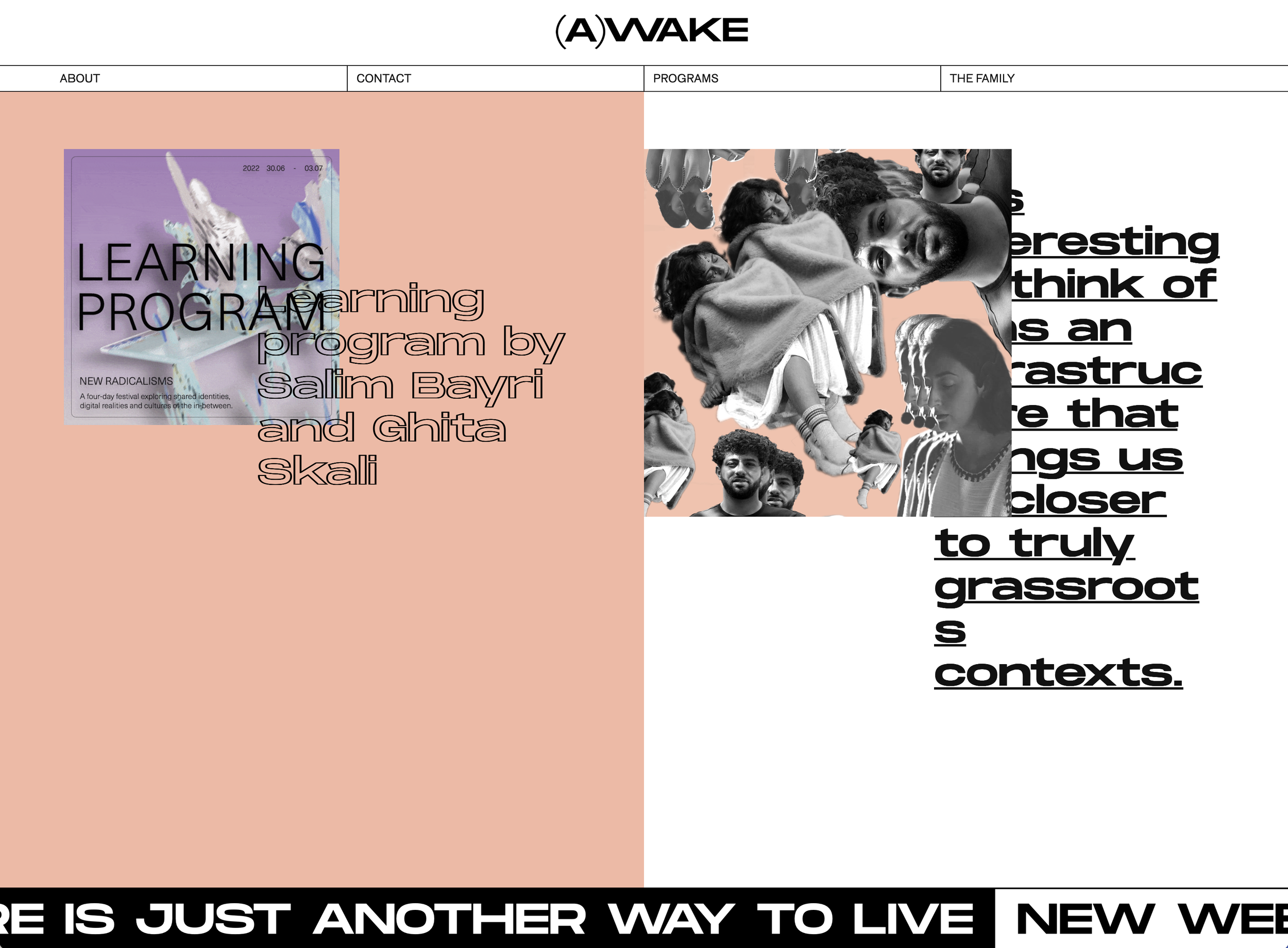
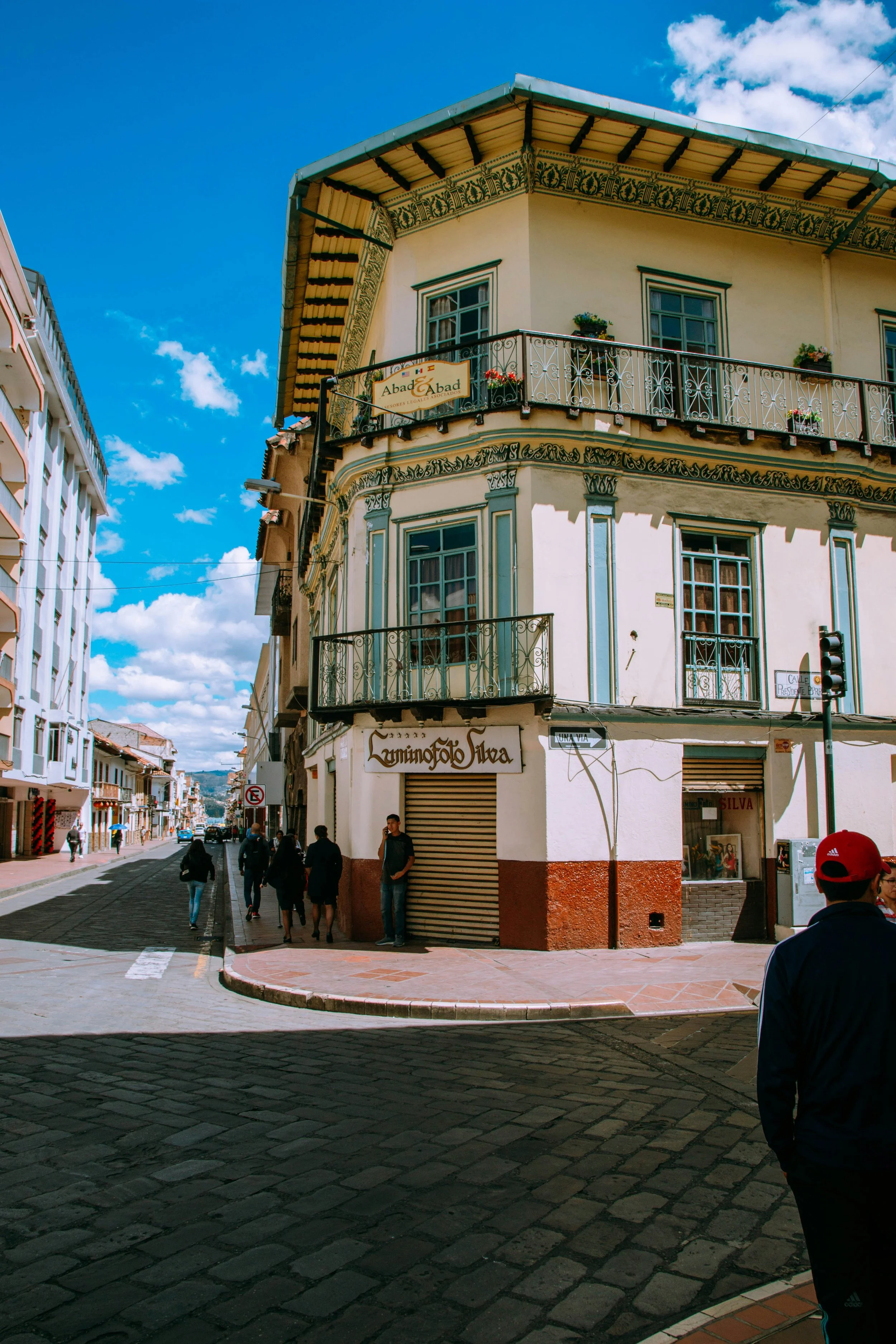
Photo credits: (A)WAKE website homepage
(A)WAKE Foundation, Rotterdam (The Netherlands)
(A)WAKE is a foundation based in Rotterdam, The Netherlands, focused on providing a space for the in-between voices with multiple cultural backgrounds, with a special focus on the WANA (West Asia and North Africa)* region. The foundation develops cultural programs that do justice to the complexity of current socio-political contexts and to the perspectives of minorities who have been overlooked and/or tokenized by mainstream institutions. Their core programmes are in the fields of electronic music, visual arts and the digital world, and moving between the domains of contemporary art and politics.
The direction of (A)WAKE is driven by questioning the emancipatory potential of the digital world in favor of equal access and mutual cultural exchange between WANA (West Asia and North Africa) and West Europe.
Projects by (A)WAKE include H3ritage Studios, the New Radicalisms biennial and the newly opened Moezeum café in Vijverhofstraat 29, in Rotterdam.
*WANA (West Asia and North Africa) countries include: Afghanistan, Algeria, Armenia, Bahrain, Egypt, Iraq, Iran, Jordan, Kuwait, Lebanon, Libya, Morocco, Oman, Palestine and its Occupied Territories, Qatar, Saudi Arabia, South Sudan, Sudan, Syria, Tunisia, Turkey, United Arab Emirates, Western Sahara and Yemen.
An interview with Shirin Mirachor, Director and founder of (A)WAKE: identity and tradition as springboards for larger, deeper topics to explore through the arts.
“Funds have, for a long time, been focused on identity, but that is not something we are that interested in at the moment”, Mirachor explains. While the organisation’s origin is firmly rooted in the diasporic condition of many of their members and recipients of their programmes, identity is, to (A)WAKE, more of a springboard to go deeper in the subjects that interest them. That does come with challenges though: “what I noticed is that the media is less interested in the topics that truly interest us, because they become nuanced and complex” Mirachor explains, “and when the funds see you have less media coverage they deem you programmes as ‘less easy to assess’, which becomes a challenge for us to be granted financial support. The struggle at the moment is finding a balance between more ‘likeable’ or ‘assessable’ projects, and more critical, experimental ones.”
Identity becomes, in that sense, a double-edged sword, something activating, yet also a tool for controlling the narrative of what culture should be, just as the notion of ‘tradition’. “Something that's very interesting, and I think it's very solid, is this idea of tradition across the diaspora,” Mirachor replies. “Of course, tradition could be something that the mainstream and hegemonic spaces like governments use to control certain populations. But at the same time, tradition is a way through which people from marginal communities can come together.”
In this coming together, she notes, it is important to go beyond one’s own niche. She speaks of something that sounds almost like moral policing within the arts’ usual suspects or cliques – over-intellectualised spaces that become almost inaccessible. “It’s important to try to speak both languages. In artistic circles it can get very abstract and inaccessible in terms of language very quickly, and safe spaces don’t really become so – they end up being places where everyone morally polices each other. I think it’s important to have a physical space where we can break outside our own niches or bubbles and organise exchanges that go beyond that.” (A)WAKE’s Moezeum Klas, a pilot program aimed at youth from diverse socio-economic backgrounds aged between 18 and 27 years old, is an attempt at doing just that. The first edition is focused on fascism, and aims to “confront, dissect and tackle it” over the course of five sessions.
“Having a space on street-level really helps with this”, Mirachor explains, explaining why the foundations’ new space in Rotterdam, called Moezeum, is so important to them. “I truly believe in physical space, especially nowadays. Our new space is an old car garage, so you open the windows and you’re on street level, and that makes it very accessible.” For physical spaces, accessibility is important, but also kindness: “it’s very important that there’s a certain kindness in a physical space, kindness in the people behind the bar, kindness in the people at the door… I like to have people working with drinks and food who are also able to give a tour of the exhibition space.”
Key learnings and important points of connection for Cuenca:
Archiving is not a neutral practice. The question of how to archive traditions and identity traits is deeply intertwined with larger conversations of heritage and preservation. Identifying the positioning of the cultural actors in the local scene about this is crucial, as well as having very clear guardrails to avoid extractive approaches to archiving.
Innovative ways of using technology is also a form of resistance. Taking ownership over databases, datasets, creating alternative recordings, and experimenting with technology is an active way of interrogating what that technology can do to safeguard one specific genre or music ecosystem.
Public funding may have preferred themes, but those can be played with. The topics that are pre-set by authorities to access public funding (either national or international) often obey specific societal trends. Developing the capacity to take those topics and reinterpret them, going deeper in the subjects that are of interest to the ecosystem, is very important.
Diversifying streams of funding is always important, but even more so in times of uncertainty. Combining funding from the hospitality industry, or from having a hybrid cultural space, with artistic programme-making is a regularly used format that is very successful – drinks and food can often pay for programming independence.
Physical spaces at street level are key. For accessibility, to ensure openness to diverse audiences, to tap into different niches, to bring social bubbles together – always ensuring kindness.
In times of global polycrisis, solidarity across borders is key, even if the exact format of that solidarity is not clear, even if the connections with other global narratives are shifting, even if it may be difficult to sustain that solidarity through time.
CASE STUDY 2
Spaces for experimentation in contexts of conflict
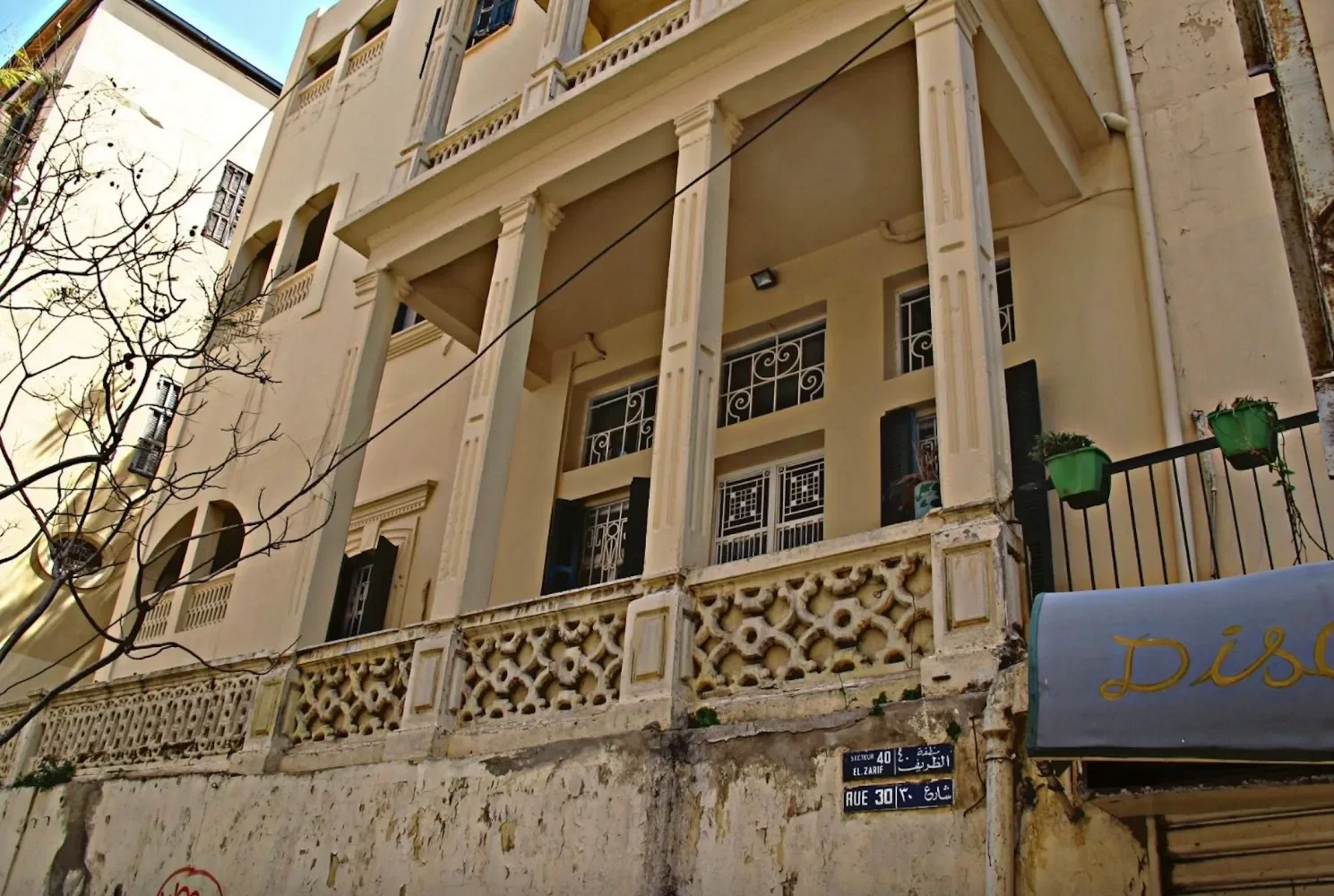
Entrance to Zico House on Spears Street, Sanayeh, Beirut. Image by Zico House.
Zico House, Beirut (Lebanon)
Zico House is a multidisciplinary cultural venue and artist residency in Beirut. It started in 1994, a few years after the end of the Lebanese civil war, by Moustapha Yammout (also known as Zico), a lover of arts and culture, in his traditional family home – a traditional Beiruti building dating to 1935 – in order to give artists and performers a space to create and express themselves.
As a platform for emerging artists, it defends experimental and avant-garde works and contributes to the development of art in Lebanon. The space focuses on smaller crowds (events of approximately 40 people), while the biggest areas of the house can host a maximum of 70 audience members (inside) and the garden and the roof, around 100 people.
Aside from being a space for performance, Zico House has also initiated collective projects, incorporating the whole building as a space for encounter and exchange, with cultural activities taking place throughout the house, on the roof, in the garden, on the 1st, 2nd and 3rd floors. The space can be transformed depending on the needs of each artist or spectacle.
The programming is multidisciplinary, and is created carefully by Zico himself alongside a few other colleagues and volunteers running the space, whose youth and different areas of interest contribute to the diversity of the overall offer. Zico purposefully leaves a lot of gaps open, to be able to incorporate new acts and ideas on short notice. This makes the space even more accessible.
While offering flexibility and diversity, Zico House also focuses on capacity building in cultural programming, and seeks to create a network among like-minded institutions (formal and informal) in Beirut and beyond.
The venue is run by Zico himself, one person taking care of promotion and social media, one person taking care of the café, and an association who takes care of the theatre.
An interview with Moustapha Yamnout, also known as Zico, Director and founder of Zico House: flexibility and responsiveness as the keys of a cultural space in contexts of conflict.
“When we started, it was very new to have a space dedicated to different forms of art”, Zico explains. “We started from the artists’ needs, from the things that were missing: rehearsal rooms, creation rooms, performance equipment.”
Zico explains how the start of Zico is related to the post-war context in the 1990s in Beirut. “The post-war reconstruction often focuses on the reconstruction of buildings and infrastructure from an outsider perspective, not on the local inhabitants of Beirut and their needs in the city,” Zico explains. For decades, reconstruction and urban planning have been forms of control. In particular, in the face of destruction of urban spaces, either planned or violent due to war, demolition and reconstruction are very powerful ways to reshape the local context in a way that inevitably affects its cultural landscape. The work of scholars such as Howayda Al-Harithy (Lebanon) and Ammar Azzouz (Syria) tackle the issue from an architectural (yet profoundly useful) point of view.
“People within the theatre scene started organising and creating associations and meeting moments. All other art scenes also started organising and beginning to do some more work on the ground, prioritising spaces for connection. The most important to us was to let people perform in front of an audience, to have reactions from that audience, interact with them.” The venue thus began positioning itself as a springboard for artists to develop their artistic careers: “many people start from Zico, and then they go on and continue with their own artistic paths.”
The success and importance of Zico House lies not only in the existence of the space as such, but also in its flexibility and adaptability. “Technical matters are very important – theatre, light, sound, projectors, tools, scenography… Gear is important, to do things in Zico House, but also beyond this space itself.” Absolute flexibility and capacity to turn any space into a “fully professional” space contributed to Zico building a name and inspiring more individuals to do the same – something that Zico finds absolutely crucial.
“Art and culture also give people power and hope, but they are not stronger than food and health for example. If there is no food, art is not going to help with that. Art is something that is generated every day, all the time, but it is not something that can substitute the minimum, basic needs – eating, sleeping, security. For example, in Gaza now, I think that there is art, but we don't hear about it because it's very minimal.” Moustapha Yammout (Zico), Director and founder of Zico House

Key learnings and important points of connection for Cuenca:
Starting from the artists’ needs is key. In spaces of social and political instability, or in contexts of conflict, the most basic needs take center stage. Often, space for rehearsal and performance (most precisely, the gear needed for that) is what is most crucial.
Flexibility and adaptability are absolutely necessary. Having a fixed space is key, but when instability is absolute, the capacity to set up a performance or rehearsal space anywhere is even more key.
Programming for different generations is important. Putting up parties for the youth, for example, helps develop a long-term bond with a place, and creates attachment to the city as a whole.
Shared curation to ensure diverse programming. A variety in acts, genres, and formats creates an open space, and also recognises the inherent diversity of a specific territory. Working from the acceptance that one person does not hold all programming knowledge and sharing the curation of the acts is very important to ensure reaching as far as possible.
Programming is political. Leaving room for the unexpected, programming upcoming acts and providing mentorship, promoting equality among scenes, and pushing audiences to see something they don’t normally see is political.
The commercial music scene often exists with fewer challenges than the experimental one, hence why the latter will quite likely need more support from audiences and venues, especially in places of instability.
Audiences fluctuate – and will always do so. Sometimes it’s traffic, sometimes it’s the weather, sometimes it’s fear. Audiences come and go and often it is dangerous to make assumptions about the success of one specific program without having a holistic look at the whole ecosystem.
Never underestimate the power of networks. One of the most unbelievable characteristics of cultural scenes worldwide is that different niches, organisations and people work in silos more than they are aware of. Purposefully breaking those silos is necessary to strengthen the sector as a whole and share resources in times of uncertainty. In that sense, also empowering upcoming actors in the scene is a key element for their survival.
Archiving creates a foundation for future artistic creation. It not only creates a database of the happenings in one particular place, but also it becomes a testimony to the value of these places and a tool for further artistic creation.
CASE STUDY 3
Synergies between cultural policies and climate change
Julie’s Bicycle, London (United Kingdom)
Julie’s Bicycle is a on-profit organisation based in the UK focused on mobilising the arts and culture to take action on the climate, nature and justice crisis. Founded by the music industry in 2007 and now working across the arts and culture, it has partnered with over 2000 organisations in the UK and internationally. JB combines cultural and environmental expertise to develop high-impact programmes and policy change to tackle the climate crisis. Julie’s Bicycle focuses on high-impact programmes and policy change to meet the crisis head-on.
Their first of its kind Future Festival Tools, learning resources for professionals to embed sustainability within their careers, prove to hold an enormous potential for impact in mainstreaming environmental action throughout all events and job roles.
Their projects range from sustainability consultancy, to advocacy to developing environmental and impact measuring tools. They also maintain and regularly update a Resources page, where they link case-studies, guides and research on the topic of climate-sensitive cultural policies, for example this Climate Risk Mapping of London’s cultural venues by Bloomberg Associates.
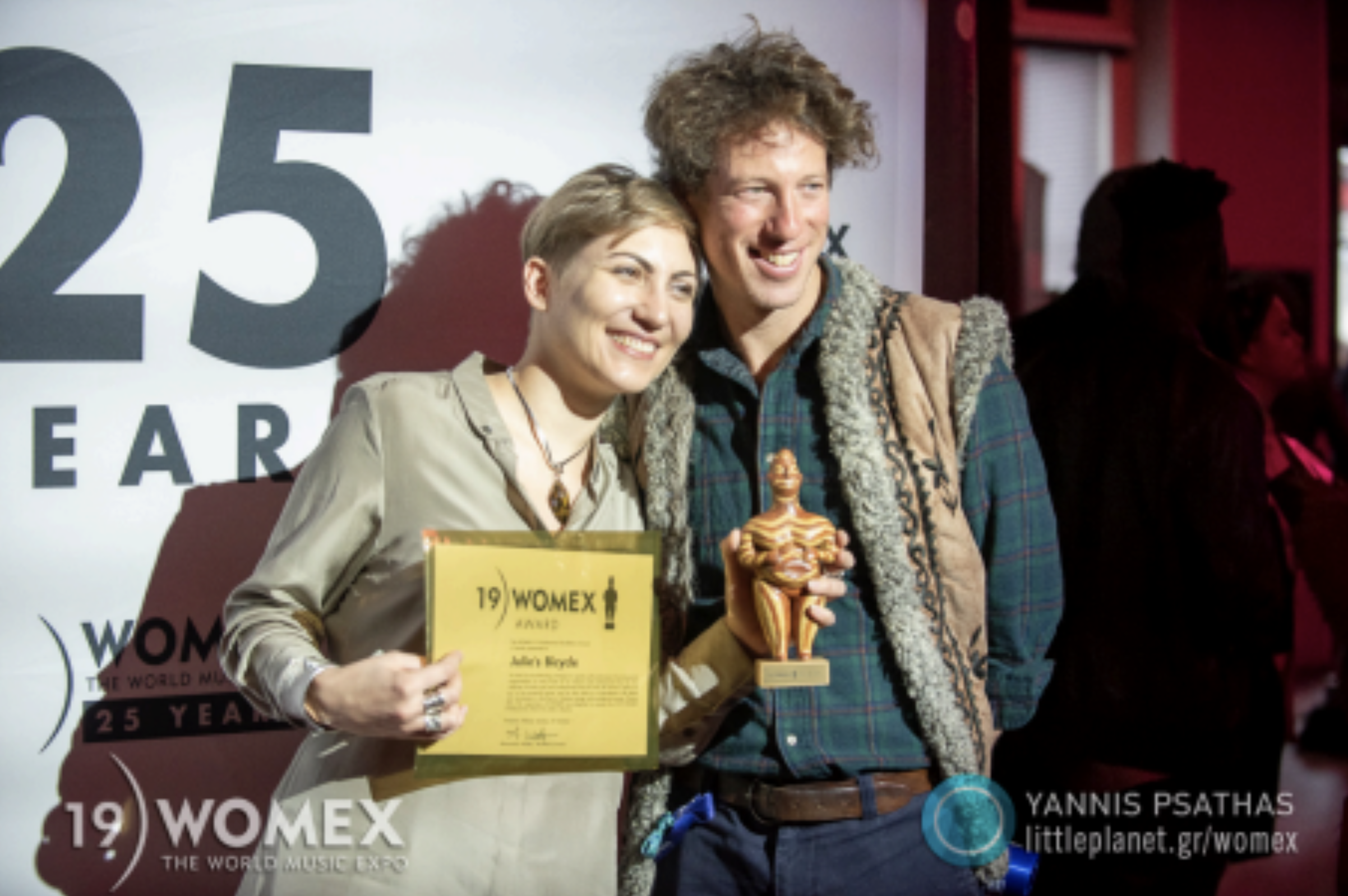
Chiara Badiali and Sam Lee receiving a WOMEX19 award on behalf of Julie’s Bicycle in 2019. Image by Yannis Psathas
Key learnings and important points of connection for Cuenca:
De-growth is the way to go. For festivals and events, the question of whether to go smaller or not is slowly less of a question and more of a need – only through controlled numbers are festivals and event operators able to keep the amounts manageable and the ecosystem local, something that surfaces in several examples worldwide. Furthermore, smaller events are also more likely to have sustainability in their philosophy.
Prioritise the local ecosystem. Festivals and showcase events are key meeting points for the industry, yet the impact of flying and other unsustainable practices related to travelling are important to take into account. Rethinking timings (gatherings going from annual to bi-annual) and the target audiences (international vs national and local) can be good entry points.
Use music gatherings as spaces for experimentation. Few large-scale challenges are as immobilising as climate change for some audiences, especially in light of a very usual feeling of over-complexity and helplessness. Music events can also position themselves as spaces for experimentation and reflection on these topics, becoming catalysts for social and ecological organising.
Beware of greenwashing. A good communication strategy simply won’t do – actions need to back the words, otherwise sooner or later both audiences and governments (those who care) will notice if promises are empty.
Other societal problems might be considered more urgent and have priority. In these instances, using culture to center climate issues is key.
Training is important. According to The Shift Project, Decarbonize Culture! Report 2021, 88% of cultural professionals in France are not trained in energy and climate issues. Those numbers may vary geographically, yet they speak to a blank spot that is crucial to create change.
Test the technology. Interesting and exciting tools are being explored worldwide – a quick scan can shed light on possible ideas whose implementation might be just fit for your local context.
Use music to restore the ecological value of places. Either by bringing awareness or by relocating activities, music events and cultural practices can be powerful actors of territorial management and land planning.
Organise collectively. Changing the status quo is never easy – and these large-scale fights will always be more successful when there are more and more people involved. Find partners and strengthen the networks.
Sustainability is not only environmental – it is also economic and social, and when it is not addressed holistically, supporters might be lost along the way.
Other relevant examples, organisations and research on this topic:
Reset! Network’s Atlas of Independent Culture and Media, Volume 2 (EU)
Volume two of this landmark work by the European network Reset! – a sensitive cartography of independent realities in Europe – is entirely dedicated to the cultural sector’s pursuit of ecological commitment, featuring interviews with organisations, people and change-makers that have the environmental transition at the core of their cultural work.
The Shift Project (FR)
The Shift Project is a French think tank advocating the shift to a post-carbon economy. As a non-profit organisation committed to serving the general interest through scientific objectivity, we are dedicated to informing and influencing the debate on energy transition in Europe. In 2021 they published a report called Décarbonons la Culture! (Let’s decarbonise culture!) focused on the French context. This was the fifth publication from a larger Plan of transformation of the French economy. From their report, there are a few key directions for festivals and events that are good advice on this topic:
Relocate activities. Place culture at the heart of territories and make it a driving force for local transition.
Slow down. Artists will continue to travel… Stay extended / reduce the number of trips.
Reduce the scales. Rethink the permanent growth of audience size.
Eco-design. Take into account the global impact of a scenic or scenographic creation (life cycle analysis).
Renounce. To certain high-carbon practices already in use and high-carbon technological opportunities.
The Nile Project (US)
International nonprofit that promotes the sustainability of the Nile River by curating innovative collaborations among musicians, university students, and professionals. It later evolved into a concert performance that toured around the world. Founded by Egyptian Ethnomusicologist Mina Girgis and Ethiopian-American singer Melkit Hadero.
Arts & Climate Initiative (US)
New York-based organisation using storytelling and live performance to foster dialogue about the global climate crisis. Primarily focused on theatre and performing arts. Initiators of the Arts and Climate Change blog, which aims to compile all works of arts about climate change.
Art Switch (US/NL) New York and Amsterdam-based nonprofit in the field of Art and Climate Action founded in 2019. Focused on education, engagement and fostering connections between artists, scientists, academics, and art professionals. Multidisciplinary platform centering on public programming, conferences, and exhibitions with a focus on climate forward and regenerative art practices.
The Green Room (FR) Sustainability consultancy based in France working to support environmental and social change in the music sector. They develop strategies, set up low carbon tours, carry out evaluations, create programmes for raising awareness, deliver training. They are also regularly invited to music conventions and network meetings in France and abroad.
Ki Culture (NL) Ki Culture is an international nonprofit working to unite culture and sustainability. Their focus is on culture in the widest sense, as well as sustainability in economic, environmental and social terms. Their focus is on training and knowledge‑sharing.
ClimateMusic (US) San Francisco-based organisation focused on combining the talents and expertise of scientists, composers, musicians, artists, and technologists, to create and stage science-guided music and visual experiences to inspire people to engage actively on the issue of climate change.
Greener Events (NO) Greener Events is a practical oriented, non-profit organization which assists sporting and cultural events in forming strategies and acting sustainably. They deliver environmental consultation, expertise in planning and running events, consultation in certifications and CO2 reports as well as creating tools to help the sector achieve its sustainability goals.
Reverb (US) Portland-based nonprofit dedicated to creating a more sustainable music industry. They partner with musicians, festivals and venues to green their concert events while engaging fans face-to-face at shows to take action on important environmental, climate, and social issues.
Music Declares Emergency (UK) UK-registered charity founded by a group of artists, music industry professionals and organisations dedicated to raising awareness and creating action around climate change in the music industry. Through campaigns like NO MUSIC ON A DEAD PLANET they focus on shifting communication dynamics around climate within the industry and advocating for an environmentally-friendly sector.
Clubtopia (DE) A Berlin-based organisation devoted to sustainability and climate matters within the city’s club scene, addressing clubs, event organisers and guests with the goal to raise awareness and change behaviour in the industry. Their Green Club Guide was recently made available in English.

PART 5
Conclusion and Final Recommendations
Key learnings for the local partner and most pressing next steps
The analysis of Cuenca’s music ecosystem reveals both significant challenges and untapped potential. While the city benefits from a vibrant creative community, a rich historical setting, and relative safety compared to other Ecuadorian urban centers, it remains constrained by national crises — economic instability, escalating violence, institutional fragility, and recurring energy shortages. These pressures, compounded by the post-pandemic downturn, have weakened cultural infrastructures, reduced opportunities for live performance, and intensified reliance on inadequate venues. Another point that emerged repeatedly in interviews and focus groups is Cuenca’s deeply conservative character, shaped by its isolation from international circuits and its own colonial history.
Yet, this very context highlights the transformative potential of music and the arts. Time and again, cultural expression has shown its ability to raise awareness, broaden perspectives, and foster empathy and inclusion — precisely the qualities needed to navigate the city’s current social and economic challenges. Cuenca’s UNESCO-listed historic center, remarkable natural beauty, and small, highly walkable scale position it as an ideal setting for innovative approaches to cultural revitalization. Reconnecting heritage with contemporary expression can reimagine public spaces, transform underused locations, and generate inclusive cultural experiences that strengthen community life and expand the city’s appeal to visitors.
Central to this renewal is rebuilding cultural self-esteem and investing in audience education. In a global media landscape dominated by streaming platforms and homogenized content, fostering pride in local music and curiosity for diverse sonic expressions becomes essential. By strengthening music education, mapping cultural actors, and promoting collaborative networks, Cuenca can bridge tradition and innovation, ensuring its music ecosystem remains resilient and future-oriented.
In doing so, Cuenca reflects the broader experience and potential of many Global South cities — places where rich cultural traditions coexist with rapid social change and where, despite inequality and fragile infrastructure, close-knit communities and creative resilience provide a foundation for inclusive cultural growth.
Juan Pablo Viteri,
Researcher, Media Producer and Director of Quito-based Radio COCOA
Overview of key recommendations for next steps
Short term (0-12 months)
1. Simplify permits:
Implement immediate adjustments to reduce bureaucratic hurdles for small events in plazas and parks.
a. Identify key priorities for control by public administration: what are the boxes they need to check to allow activities to take place?
b. Suggest alternative forms of permission-granting.
c. Start discussions for the establishment of a one-stop-shop for cultural matters and permits.
d. Add flexibility to the all-for-free requirement of public events, and explore and suggest alternatives for hybrid models (pay 1 day – access 3 days).
2. Pilot public-space concerts:
Test pop-up shows or open-air workshops in key plazas or riverbanks to gauge community response.
a. Identify a series of fitting spaces for pop-ups.
b. Conduct a preliminary participation exercise (are there shop owners around? How can their support be gained?) – guarantee the support of the surrounding neighbours.
c. Document the event and its success.
3. Map and catalog the ecosystem:
a. Conduct a comprehensive, data-driven mapping exercise that quantifies all actors in the ecosystem, from venues, to musicians, to cultural workers, to youth organisations.
b. Create a digital directory and a stakeholder map of all actors in the ecosystem.
c. Develop and execute a qualitative research exercise to unpack pains, needs and challenges of the different actors in the ecosystem.
d. Identify gaps and opportunities.
4. Launch audience education initiatives:
a. Offer talks or mini-workshops before concerts to introduce new genres and artists.
b. Explore and amplify the role of local radios and digital media initiatives as spaces to expose audiences to alternative and / or new sounds.
c. Diversify the programming of public events to introduce a larger variety of genres and artists.
Medium term (1-3 years)
1. Strengthen music education:
Integrate music into school programs and extracurricular activities with municipal or NGO support.
a. Create a roster of artists and initiatives that would be fitting and willing to participate in educational activities.
b. Establish a pilot project with one or several schools.
c. Strengthen partnerships with schools and existing cultural venues. Foster exchange among them.
2. Develop partnerships:
a. Explore partnerships with other regional or local councils.
b. Identify 3-5 key sectors related to music such as tourism, health, education and community development, understand their key priorities and explore how to align music’s priorities with these, to join forces in fundraising or permissions.
c. Engage local businesses, universities, and tourism operators to co-fund festivals and training programs. Explore sponsorship or risk-sharing models.
3. Repurpose underused infrastructure:
Transform select warehouses or heritage buildings into multipurpose cultural spaces.
a. Review zoning regulations and identify 3-5 key areas with potential. b. Create a vision document that outlines a concept for the redevelopment. c. Initiate conversations with the municipality and landowner(s).
Long term (3-5+ years)
1. Institutionalize public-space programming:
Establish recurring festivals or seasonal events that activate historic and natural spaces year-round.
2. Integrate music into city strategy:
Position music as central to Cuenca’s tourism, youth development, and sustainability agendas.
a. Use the mapping and cataloguing exercises to create policy briefs. b. Initiate discussions for the development of an integral cultural vision for Cuenca that includes a dedicated music section.
3. Create a resilient cultural ecosystem:
a. Develop diversified funding mechanisms,
b. Develop and streamline training pipelines, both in institutional school environments and outside of those, for example in cultural venues.
c. Develop crisis-response, inclusive mechanisms and policies (i.e. Covid-19 responses worldwide) that can adapt to national crises while preserving Cuenca’s heritage and creative vitality.